
Bed & Breakfast
Because when every other ritual broke, when the books didn't help, and the people didn't help, and the pills didn't help, and the silence got too loud, this was the only sentence left that still held shape in the mouth.


Bed & Breakfast | Lyrics
Oh!
Dear Lord!
Save me from myself!
I'll take care of the rest.
If you want to check in
Every now and again,
Go ahead, carry on,
Be my carry on guest.
Hospitality and Transience: The "Bed & Breakfast" Metaphor
The title "Bed & Breakfast" immediately establishes a framework of temporary residence and light-touch hospitality. Unlike a permanent dwelling or a cathedral, a bed and breakfast is a place of passage—a comfortable, transient stopover.
By framing the relationship with the divine through this lens, the aphorism strips away the heavy, often stifling architecture of traditional religious devotion.
The "guest" metaphor further refines this relationship. A guest is invited; they do not barge in. By inviting the divine to be a "carry on guest," the speaker utilizes a clever double entendre.
A "carry on" is a piece of luggage—something small, essential, and always within reach during a journey. Simultaneously, "carry on" suggests continuity and lack of fuss.
This characterizes the spiritual presence not as an overbearing landlord, but as a supportive companion who fits into the overhead compartment of the speaker’s life, ready to assist without demanding total control of the itinerary.
The Internal Battlefield: "Save Me from Myself"
The crux of the poem lies in the desperate plea: "Save me from myself!"
This line acknowledges a profound psychological truth: man’s greatest enemy is often his own psyche. While we often pray for protection from external calamities—poverty, illness, or enemies—the speaker identifies the internal landscape as the true zone of danger.
"Saving me from myself" implies a struggle with self-sabotage, ego, addictive tendencies, or the paralyzing weight of one's own thoughts.
The subsequent assertion, "I'll take care of the rest," creates a sharp dichotomy between internal stability and external action. It suggests that if the divine can provide the emotional and spiritual "governor" to keep the self from imploding, the individual is perfectly capable of navigating the logistical demands of the world.
This is a humble yet confident partitioning of labor: God manages the soul’s chaotic impulses, while the human manages the world’s practical challenges.
Negotiating Agency and Divine Presence
The aphorism reflects a modern negotiation between personal agency and spiritual surrender. Historically, many theological traditions demanded total submission—the "Thy will be done" approach where the individual is merely a vessel.
Here, however, we see a collaborative model. The speaker retains their autonomy ("I’ll take care of the rest"), asserting that they are not helpless, merely prone to internal malfunction.
The invitation for the divine to "check in every now and again" suggests a rhythmic, rather than constant, spiritual awareness. It acknowledges that human life requires a degree of self-reliance.
By allowing the divine to "carry on," the speaker creates a space for spiritual presence that doesn’t require the abandonment of the self.
It is a balanced theology of partnership where the divine provides the moral or spiritual "anchor," allowing the individual to sail the ship.
Contemporary Relevance: Self-Regulation in a Chaotic World
In the context of contemporary life, this aphorism resonates deeply with the modern focus on mental health and self-actualization.
We live in an era of "hyper-agency," where we are told we can control every aspect of our lives through discipline and technology. Yet, the prevalence of anxiety and burnout reveals that we still struggle to "manage ourselves."
The sentiment "Save me from myself" is a poetic shorthand for the need for mindfulness, grace, or external perspective in an age of internal overwhelm.
It speaks to the person who can manage a corporate merger or a household of four but cannot manage the "critic" inside their own head.
Furthermore, the "Bed & Breakfast" model of spirituality appeals to a generation that may be wary of institutional religion but remains open to "checking in" with a higher power.
It offers a spirituality that is portable, non-intrusive, and profoundly practical—a "carry on" faith for a fast-paced world.
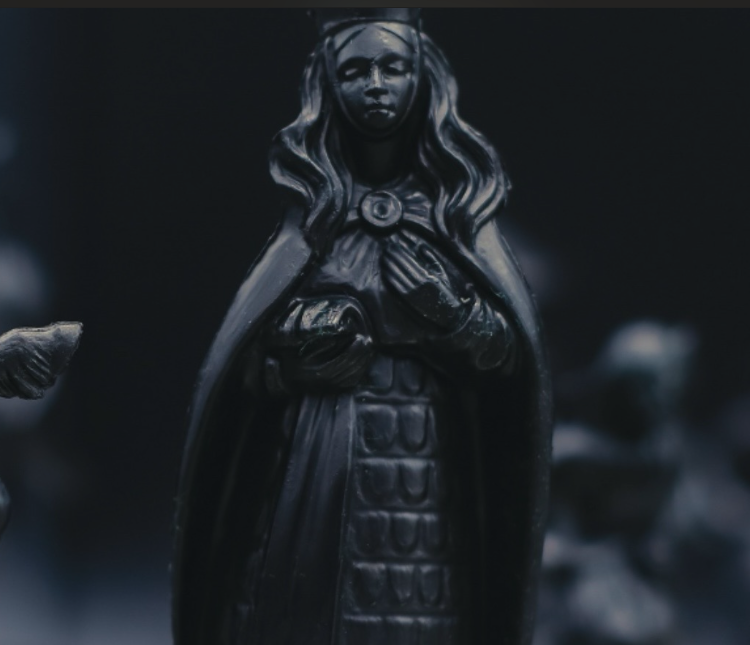
On the Structure and Function of "Bed and Breakfast." On the Structure and Function of "Bed and Breakfast."
A Quiet Study in Boundaries, Speech, and Containment. Introduction. The fragment titled "Bed and Breakfast" is short enough to fit inside a single breath, yet layered enough to contain several distinct postures of thought.
It opens in the language of petition, moves through negotiation, and closes with something resembling grace, though on second reading the grace may be conditional.
There is no urgency in the tone, no raised voice, just a statement of terms and a carefully chosen limit.
This essay approaches the fragment as a composed structure, built not to persuade but to hold. It is not metaphorical.
It is not abstract.
It is something closer to architecture, a structure designed to allow certain things in, keep others out, and clarify the role of the one who occupies the interior.
The goal here is simple: to explore how this structure works and what it accomplishes, using language from geometry, rhythm, and psychology, quietly and without adornment.
In our text under study: Bed and Breakfast.
It reads like this: Oh dear Lord, save me from myself. I'll take care of the rest. If you want to check in, every now and again, go ahead. Carry on, be my carry-on guest.
Part 1: Formal Arrangement. The fragment is composed of 7 lines. This number carries no explicit symbolic weight here, but it does create a natural arc: 3 lines of address and declaration, followed by 4 lines that form a distinct shift in tone.
Line Count Structure: Lines 1-3: Invocation, self-request, jurisdiction.
- Lines 4-7: Contingent hospitality, soft Permission, closure.
The first 3 lines are vertically stacked; they descend inward, narrowing the field of engagement to a single point—the speaker, and his own internal volatility.
The final 4 lines curve outward, extending a measured invitation to an unnamed guest. This structure resembles a 2-part form with a hinge at line 3; one might think of it as a folding object, half-containment, half-opening.
Part 2: The Initial Posture—Internal Alignment. Oh dear Lord, save me from myself. I'll take care of the rest. This first triad forms a descending sequence. Each line, short, quiet, and precise. The tone is solemn, but unadorned.
There is no poetic flourish here, just careful phrasing. The phrase "Oh dear Lord" is worth attending to. The "Oh" is not ornamental; it is elongated, a vowel shaped by breath.
Its presence is necessary to open the The speaker begins, not with an assertion, but with an opening. That opening is directed toward a familiar figure, not necessarily a figure of religion, but of presence.
"Dear Lord," here, is a stand-in for whatever agency the speaker believes can act upon the speaker's own will. The second line is the central hinge of the entire piece: "Save me from myself."
The speaker does not ask to be saved from the world, not from violence, danger, grief, or loss. The threat is internal. The request is for containment. This is not confession; it is an operational directive.
The speaker is acknowledging a specific risk, the kind that arises from one's own hands, words, or choices. The phrase is narrow. It does not seek transformation, just restraint.
The third line resolves the jurisdictional matter: "I'll take care of the rest." This is not a dismissal, but a boundary.
The speaker defines the scope of the request. Only the internal self requires attention. Everything external, The circumstances, the others, the consequences, will be managed directly. Note that "the rest" is a phrase with dual application.
It refers both to other people and to the concept of rest itself, as in sleep, calm, the pause that follows. That ambiguity is left intact, and it strengthens the geometry of the structure.
The 3 opening lines together create a triangular frame.
Top point: the invocation. Oh dear Lord, the open breath. Right edge: The inner appeal, save me from myself. Vertical descent. Left edge: The reassertion, I'll take care of the rest. Horizontal spread. The resulting shape is a containment triangle, narrow at the top, expanding downward.
Part 3: The Hospitality Clause.
The final 4 lines introduce a different tone. The geometry changes here.
The inward cone of the first 3 lines gives way to a curved opening. If you want to check in, every now and again, go ahead, carry on, be my carry-on guest. These lines are polite. They are neither pleading nor demanding. They offer a possibility.
The speaker allows for the presence of another, but only under specific conditions.
- Line 4: if you want to check in.
This is conditional language. The guest may check in, but only if they want to. There is no summons. The permission is offered passively. "Check in" here functions on multiple levels.
It evokes the act of entering a hotel or lodging space. It implies spiritual visitation, checking in on the speaker.
It echoes the language of supervision, therapy, or confession. The phrase is soft, but it implies surveillance.
Entry is allowed, but not residence.
- Line 5: "Every now and again."
Here, the temporal terms are established. The visitor may return, but not often, not regularly. The frequency is unstated and intentionally vague. This serves has two functions. One, it keeps the space from becoming communal.
Two, it signals a tolerance for guidance, not dependence.
- Line 6: Go ahead, carry on. This line is deceptively simple. It functions as a release phrase, but "carry on" is a phrase with layered meaning.
It may mean continue.
It may mean make a fuss, as in "don't carry on."
It may signal lightness, as in "carry on luggage."
It is both permission and limitation. The speaker invites continuation, but with implied boundaries.
- Line 7: Be my "Carry on guest."
This is the final phrase, the signature of the structure. "Carry on guest" is not a known idiom; it is a constructed phrase, poised between the language of travel and that of hospitality.
It creates an identity for the visitor: a guest with small luggage, a guest who will not stay long, a guest who travels light, a guest with no claim to permanence.
This phrase is the final lock. The visitor may enter, but only with conditions: no heavy baggage, no extended stay, no implied authority.
Part 4: Psychological Geometry. In psychological terms, this structure serves as a kind of boundary ritual. It acknowledges the potential for internal instability.
It offers a brief, precise request for help. Then, it sets terms—terms of entry, presence, and departure. The function is twofold: 1. Containment of the self.
The speaker identifies his own interior as the zone of greatest risk and makes a limited request: "Stop me from doing harm I cannot undo."
Second Regulation of Visitation: The speaker permits interaction, perhaps divine, perhaps relational, but on very narrow terms.
The tone is not hostile; it is formal.
It allows presence without control. This structure resembles the kind of contract drawn by someone who has been harmed by uncontrolled closeness, or someone who, having harmed others in the past, now seeks to avoid proximity that might cause future harm. It is a house with one room open, but the key only fits a small door.
Part 5: Rhythm and Breath. The lines move in short, balanced steps.
The longest line is 7 words. Most are 4 or fewer. This rhythm has practical effects. It makes the entire fragment readable in a single breath cycle. It prevents emotional escalation. It creates the feeling of speech spoken with precision—not blurting, not rambling.
The rhythm also suggests control. There is no drift; each line concludes fully before the next begins.
Even the final pun, "Carry on, guest," is delivered without ornament.
Part 6: Possible Applications. Without assigning any label or categorization, one may note that this structure can serve a number of functional roles: as a personal reminder to contain what threatens from within, as a quiet refusal of dependency from external figures, as a closure ritual for periods of intensity, grief, or spiritual spiritual exhaustion, as a statement of terms in moments when surveillance, divine or human, feels suffocating, as a protective rhythm when navigating emotionally complex conversations.
Its strength lies not in persuasion but in configuration.
It holds. Closing Remarks. Bed and Breakfast is not grand in scope. It is local, quiet, interior. It names one point of danger. It claims one act of authority. It offers one key of entry.
Light, brief, conditional. It closes with hospitality, but not surrender. This is a structure built not to impress or unfold, but to hold shape under pressure. It does not ask to be admired, only to be allowed to operate in peace.
The house is open, but the rules are clear: carry what you can, stay if you must, but no bags larger than the heart can bear, and be on your way before the soul breaks open again.

"Let's not dress this thing up. Let's not pretend it's cleaner than it is. This is no clever form. It is a last breath before the jaw clenches.
A hand tightening on the doorknob.
A whisper said because saying more would be too much and saying nothing would kill you."
In fact, only the first 3 lines were written out in between a mixed-up mishmash of other bizarre ink doodles on oversized paper, which was probably pilfered or wherever it came from — matters not, regardless.
Only the first 3 lines made it out alive, escaping down the arm, through the hand, into the ink, and then finally on to the paper.
There they floated, upon a sea of white, nobody knows for how long. But then came the rest—the second half of the body.
And then, one day, just like magic, a marquee appeared: Bed and Breakfast.
Plain, simple, to the point.
By all rights and privilege, Bed and Breakfast seems to be a poem—a short, unassuming poem.
But No, this isn't a poem.
It's a barricade.
Looks like a poem, but no, not a poem.
Bed and Breakfast.
An invocation against proximity.
Oh, dear Lord, save me from myself. I'll take care of the rest.
If you want to check in every now and again, go ahead, carry on.
Be my carry-on guest.
One: the shape of the threat. The speaker opens with breath, not flourish. Oh is not literary. It's anatomical. It's the sound made by someone who's just realized they might do it again. That they are, in fact, the most dangerous person in the room. That whatever harm comes next, it won't come from out there.
It'll come from inside. Save me from myself. Isn't that the most honest thing anyone's ever said? Not protect me from the world, not guide me through the storm, but get in here and stop me from getting to me. There's clarity in it. No theater, no theology. Just the locked room and the broken key inside it.
Two: A sovereign clause. "I'll take care of the rest." This is the line where the knife gets set on the table. The speaker isn't asking for deliverance. He's not asking for aid in battle. He's not asking for rescue. He's asking for exactly one thing: intervention from within.
As for the rest — the lies, the systems, the neighbors, the watchers, the enemies, the friends with sharp edges, the ghosts: "I'll take care of them."
And he means it. That's not a bluff. That's not a swagger. That's the voice of someone who's already made the decision and is only trying to keep it from turning inward before it's done.
Because he knows if you don't pull him back in the next second, he'll turn the blade the wrong direction.
And if you don't, he'll handle everything else. And he will.
Three. The Punctured Offer.
"If you want to check in every now and again, go ahead, carry on, be my carry-on guest." This isn't hospitality.
This is an alibi. This is the speaker laying out a clause for whatever presence is left—God, maybe, or the last honest voice, or the memory of someone who used to call in the morning to see if he made it through the night. "If you want to check in, sure, every now and again.
Not often, not long, don't linger." The voice is dry, not cruel, just done. "Go ahead, carry on," as if to say, "I won't stop you. I won't beg.
You want to come in for a moment. See if I'm still standing. Fine."
But that last line? "Be my carry-on guest."
That's not just clever. That's what it all hangs on.
It's not a metaphor. It's a fucking rule.
A carry-on guest is the kind that brings only what they can keep overhead.
Small bags, no checked luggage, no long stay, no clutter.
You can come in, but you'd better be light, you'd better be brief, and don't expect breakfast.
Four. What kind of form is this? Let's stop calling it poetic. It isn't. It just fits on a page. That's the only thing poetic about it.
What it really is: a liturgical boundary spell:
One line to open the line to the outside.
One line to state the risk.
One line to close the gate behind it.
Four lines to allow visitation, but not too much.
It's not art. It's not craft. It's defense. It's triage.
Five. Why does this work?
Because it doesn't try to prove anything.
It doesn't justify its tone.
It doesn't weep.
It doesn't explain what the speaker's done or what he's afraid of doing. It does something rare.
It tells the truth about jurisdiction.
I don't need help with them.
I need help with me, it says.
I'm fine handling the world.
I've got that part handled.
What I don't have is the part where I don't set fire to myself on the way out the door.
Six. The Witness.
That's not welcome. "Be my carry-on guest."
That line is polite enough to pass unnoticed in casual company. But it's steel underneath. It means: Come in if you must, watch if you insist, but you will not stay.
You will not unpack.
You will not change me.
It is a line written by someone who knows what happens when guests become residents.
And it's a pun, yes.
But the pun isn't cute — it's a trap door.
It keeps the door open just long enough to show the conditions.
You will carry your own weight.
You will not burden me.
You will not linger.
And if you do, you're no longer a guest.
You're a threat.
Seven. So, who is this for?
It's not for the sentimental, not for the ones who think prayer should have wings and rhythm and flowers at the altar.
This is for the man who doesn't pray unless it's all that's left.
This is for the woman who has stopped asking for justice and just wants the shaking in her hands to stop long enough to put the blade down.
This is for anyone who has ever sat in a car for 20 minutes before walking inside, whispering, "Just don't let me do it. Not tonight."
Eight. Closing.
Bed and breakfast isn't interesting.
It's not designed to be.
It's not clever, not pretty, not meant to inspire.
It's what someone says because nothing else worked.
Because when every other ritual broke, when the books didn't help, and the people didn't help, and the pills didn't help, and the silence got too loud, this was the only sentence left that still held shape in the mouth.
Oh dear Lord, save me from myself.
I'll take care of the rest.
It's not a poem.
It's a checkpoint.
And someone still alive wrote it. —
That's enough.
 Outlaw Creative
 Outlaw Creative