
Now What?
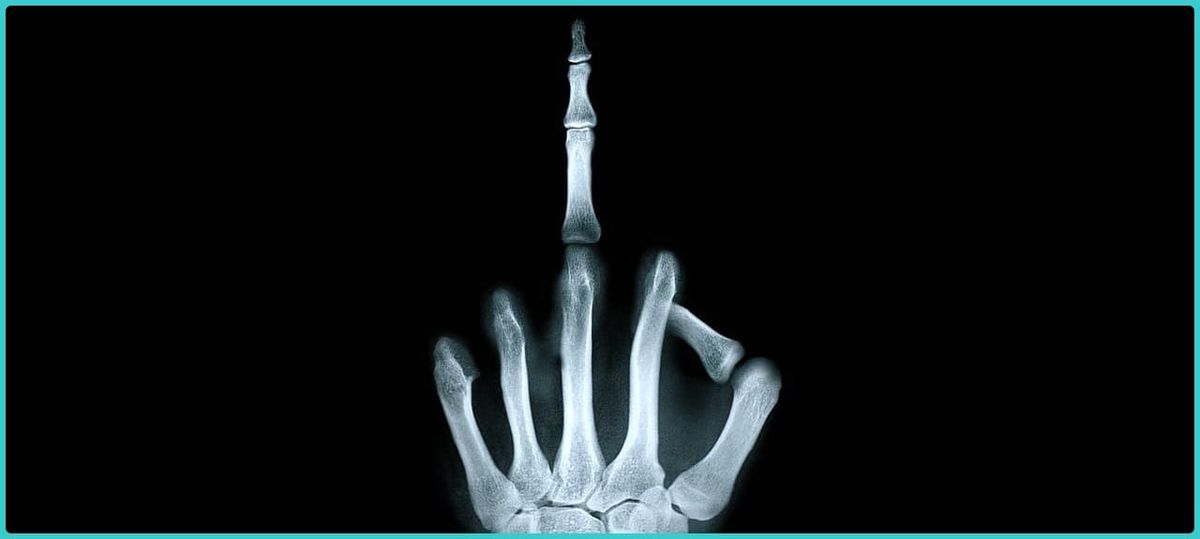

The true crisis of the booger does not begin in the nose.
That is a common misunderstanding.
The nose is merely the origin site. The cave. The mine. The mucosal province. A place of production, concealment, weather, pressure, and slow secret assembly. A booger may form there quietly for hours, perhaps days, compacting itself in the dark like some rude little geological event. Dust, mucus, air, sleep, winter, childhood, pollen, fate — all gathered into a single nasal artifact.
But while the booger remains in the nose, the moral question has not yet fully opened.
It may be uncomfortable. It may itch. It may whistle when the person breathes. It may announce itself through that terrible inner knowledge: there is something up there, and it is not where it should be. Even then, the booger remains, in some sense, private. Interior. Covered by skin, cartilage, social expectation, and the fragile fiction that human beings are civilized.
Then the finger goes in.
This is where philosophy begins.
The finger is the instrument by which the hidden becomes present. It enters the nasal passage not as a neutral observer but as an agent of retrieval. It goes in with intention. Maybe casual intention. Maybe urgent intention. Maybe the picker does not even know he is picking until the act is already underway. Many booger events occur beneath conscious supervision. The hand rises. The finger enters. The body solves the problem before the mind files paperwork.
Then extraction.
The booger attaches.
This attachment itself deserves study. Why does the booger cling to the finger? Why does it abandon the nose, where it was born, and leap to the hand like a man leaving his hometown for a better job? There appears to be a natural affinity between booger and finger, greater than the affinity between booger and nasal wall. Perhaps this is mere physics: moisture, pressure, texture, leverage. Or perhaps the booger, having waited in darkness, sees the finger and says, “Ah. Transport.”
In any case, the finger withdraws.
And now the human being confronts the real matter.
The booger is out.
Now what?
This is the question.
Not a trivial question. Not a childish question. Not a question to be dismissed by people who imagine themselves above such things. The person who claims never to have faced this question is either lying, forgetful, or currently in possession of servants. The booger-on-finger problem is nearly universal. It cuts through class, education, region, doctrine, taste, and political identity. Kings have known it. Farmers have known it. Children know it early. Philosophers have avoided it because philosophers are cowards about the body.
But the question remains:
You have a booger on your finger.
Now what?
Proper disposal would seem easy enough. One might obtain a tissue, deposit the booger into it, fold the tissue, discard the tissue in a proper receptacle, then wash the hands. This is the official civilization sequence. This is what the school poster would recommend. This is what the pediatrician would hope for. This is what the mother says she expects. This is what everyone agrees to in theory.
But very few moral disasters occur in theory.
The actual booger crisis often happens in a meeting, classroom, car, bed, waiting room, church pew, airplane seat, or other zone of compromised disposal. The tissue is not always present. The trash can is not always near. The bathroom is not always available. The hand has already done the deed. The booger now sits there, exposed, shining or dull according to its constitution, and the person must decide where this little piece of extracted self will go.
Here the taxonomy begins.
Some boogers are flickable.
These are the dry ones. Small. Self-contained. Possessed of enough structural integrity to depart the finger under force. A flickable booger invites risk. The picker may imagine a clean trajectory. Perhaps under the table. Perhaps into a corner. Perhaps into the unknowable public air, where fate may receive it and history may forget. Flicking converts the booger from possession into projectile.
But not all boogers are flickable.
This is crucial.
Some boogers possess what might be called fader glue. They stretch. They adhere. They refuse release. The finger snaps, but the booger remains, clinging like a bad debt. The picker tries again. Nothing. The finger becomes not an instrument but a hostage. The booger has been extracted but not solved.
This is the sticky booger.
The sticky booger is the true philosopher’s stone of disgust, because it changes the problem from disposal to transfer.
It must be wiped.
But where?
Under the table is the old republic. Many civilizations have risen and fallen on the underside of tables. The visible surface may host dinner, homework, business, paperwork, communion, family conversation, and the clean theater of order. Underneath, however, one may find gum, tape, crumbs, petrified spills, and the long brownish fossil record of human compromise. The underside of the table is where public virtue sends its private failures.
The bottom of a chair may also receive the offering. Behind a headboard. Beneath a desk. Along the back side of some wooden surface no one inspects until moving day, at which point the archaeological truth of a childhood may finally be revealed.
Every kid has a booger board.
Maybe not literally every kid. Some children are unusually clean. Some are supervised by people with stamina. Some are afraid of consequences. But the idea holds. Somewhere, for many children, there exists a hidden surface of nasal detritus. A bed frame. A wall edge. A headboard. A secret lower geography of the room where the child deposits what he cannot yet integrate into polite society.
Years later, one could return and find the accumulated evidence: hard little ridges, obscure smears, darkened crusts, a growing pile of dried private history. Not treasure. Not exactly shame. Something between archaeology and indictment.
Nasal detritus, if we want to dress it in a lab coat.
Boogers, if we are telling the truth.
Snot is related, but snot is not the topic. That must be said clearly.
Snot is a neighboring phenomenon. Wet, mobile, continuous. It runs. It shines. It announces illness or childhood or winter. Children with green runny noses have their own terrible dignity, if dignity is the word. The snot descends, crosses the upper lip, and is sometimes consumed through no particular decision at all. It is not eating in the chosen sense. It is more like weather entering a river.
A booger is different.
A booger has form.
A booger can be inspected.
A booger can be judged.
This is why the booger eater has a different social position from the child with a snotty nose. A snotty-nosed child may be pitied, cleaned, avoided, or sent to the nurse. But the booger eater becomes a figure. A title. A classroom office. If a child picks, examines, and consumes the artifact, the room takes notice. The room names him.
That is Michael Burt.
Every classroom has its ministries. One child draws tanks. One child knows curse words. One child can make armpit noises. One child cries when the teacher raises her voice. Michael Burt eats boogers. Or perhaps he does not. Perhaps he merely appears to. Perhaps the room has mistaken gesture for proof and proof for identity. No matter. The title settles.
Booger Eater.
The name may travel farther than the act. Down the hall. Into the next classroom. Across grades. The room may decide before the child has finished becoming a person.
This, too, is part of the booger’s power.
A booger is matter, but it is also evidence.
And evidence, once a room enjoys it, becomes reputation.
That is why the question “What do you do with a booger once it is on your finger?” is not merely about hygiene. It is about the management of visibility. The picker does not only fear having a booger. He fears being seen deciding where to put it. He fears being caught not in the extraction, perhaps, but in the disposal. There is something especially damning about the wipe. The wipe admits knowledge. The wipe shows intent. The wipe says: I had this, and I chose this surface.
The booger on the finger is bad.
The booger wiped under the conference table is biography.
This is why people become sneaky. Not because the booger itself is evil, but because disposal is a moral performance. A person wants the booger gone without becoming the sort of person who puts boogers somewhere. Yet the booger must go somewhere. Matter demands destination. Civilization depends upon pretending otherwise.
The booger, then, reveals the problem of all waste.
What do we do with what we remove from ourselves?
There are acceptable receptacles. Tissues, trash cans, drains, toilets, fire, burial, confession, therapy, language, song. But when those receptacles are absent or inconvenient, waste finds hidden architecture. Under tables. Inside policies. Behind interfaces. In families. In children. In songs. In the little extra steps that one generation wipes onto the underside of the next.
This is where the booger becomes larger than itself.
A workflow booger is also extracted inconvenience poorly disposed. Some designer, some product manager, some committee, some legacy system, some monetization goblin encountered a problem and wiped it under the user’s table. Now the user reaches for a clean path and finds dried obstruction.
Why can the app do the thing but not from here?
Why can the library store the song but not help me find it?
Why can the transcript hear me after correction but mishear me before?
Why does the system route a photograph into footage?
Because somewhere, somebody had a booger on the finger and chose not to dispose of it properly.
They hid it in the workflow.
Now you are touching it.
This is the chain of booger transmission.
The personal becomes social. The social becomes architectural. The architectural becomes normal. Then people say, “That’s just how it works,” which is one of the most suspicious sentences in the human language.
A hidden booger, given enough time, becomes tradition.
This is why the booger board matters. It teaches the child early that private residue can become part of the environment if nobody looks underneath. The top of the bed remains normal. The visible room remains ordinary. But below, behind, under, the record grows.
In this sense, the booger board is Hell’s Archive in miniature.
A place where what should have been discarded remains stored.
A place where old material accumulates in secret.
A place where the body leaves evidence the official room refuses to name.
But unlike Hell’s Archive, the booger board is comic. Mostly. It is disgusting enough to be funny and honest enough to be uncomfortable. It says: children are not clean little citizens. They are small bodies negotiating matter, shame, convenience, secrecy, and the absence of tissues.
Adults are the same, only with better vocabulary and more expensive tables.
So what should one do?
The answer remains embarrassingly simple: use a tissue if available. Wash your hands if possible. If neither is available, at least recognize the moment. Do not pretend the booger disappears when hidden. Do not flick it into public fate and call that freedom. Do not wipe it into infrastructure and leave it for someone else to discover.
If you must fail, know what kind of failure it is.
But perhaps the deeper answer is this:
Do not build a life that requires too many hidden undersides.
Because every person produces boogers of one sort or another. Physical boogers. Emotional boogers. Workflow boogers. Reputation boogers. Ass boogers. Cheese boogers. The issue is not whether residue exists. Of course it exists. The North Pole alone acquits the species. In some climates, boogers are a given fact.
The issue is what happens after extraction.
A thing has been removed.
A thing now sits on the finger.
Now what?
There, in that small bright terrible pause, the whole human problem briefly appears.
Matter wants destination.
Shame wants concealment.
Convenience wants an underside.
Civilization wants a tissue.
And the booger, patient and sticky, waits to see what kind of person you are.