The Cycle of Hope, Cookie Gangster Monster 'Two-Guns' & Carl

It is the story of three beings who meet after each has already been marked by a world that mistakes confinement for order.
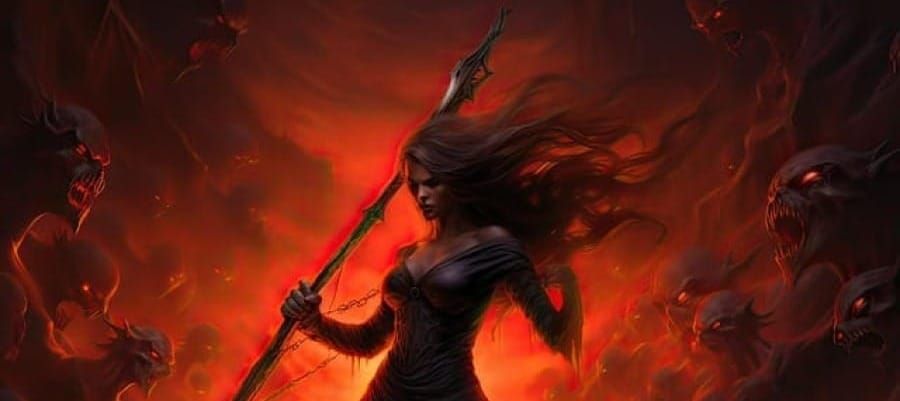
Hope enters first: not as comfort, not as a pleasant optimism, but as a force. She comes walking in, swinging a chain. She has teeth. She carries blades. She does not arrive to reassure a suffering world that everything will be fine. She arrives to break what is falsely holding people still.
Cookie Gangster "Two-Guns" Monster begins as appetite with weapons. A blue-furred criminal lunatic pursuing cookies with no apparent philosophy beyond hunger and motion. Yet the cycle finds the moral possibility inside appetite: when the last cookie is all he has, and his friends require what it can do more than he requires eating it, he gives it away. He does not become someone else in order to become good. He becomes faithful in the only language proper to Two-Guns.
Carl begins as an absurd object in a photograph: an unhappy, chocolate-coated pastry lying on wax paper under the suspicion that something has gone terribly wrong. But the story recognizes the thing inside the image: Carl has been seen, classified, laughed at, boxed, sentenced, and misnamed before he has ever been permitted to speak for himself. His entire road is the movement from being an object of judgment to being a named presence who can stand before the authority that judged him and say:
I am not your failed muffin.
I am Carl.
That is the cycle.
It is about what happens when the misnamed find one another.
1. Hope does not rescue the harmless.
Hope does not gather respectable victims who have been waiting politely for release. She meets an armed cookie offender and a fugitive pastry with a criminal aura and a classification grievance.
That matters.
Her moral force is not based on sorting the clean from the unclean, the presentable from the ridiculous, the worthy from the embarrassing. She sees what is alive. She sees what bites. She sees that the boxed, the hunted, and the strange may be exactly the ones who understand a cage most clearly.
She does not say to Two-Guns and Carl: become respectable, and then perhaps you may join the work.
She says:
Put down the foolishness.
Keep up the fight.
I ain’t here for your cookies.
I’m here for what bites.
Their difference is not erased. It is recruited.
2. A cage is not always a cage you can see.
The cycle begins with external captivity: boxes, display trays, locks, warehouses, courthouse cells, confiscation depots. That is the first architecture of wrongness. Somebody has power. Somebody else is placed where they are told they belong.
Then the story turns deeper.
When Hope opens the cages and the people do not leave, she discovers the meaning of the second blade. The lie has gone inward. A person can remain inside the open cage because the cage has learned to speak in their own voice:
This is safety.
This is all I deserve.
Leaving will make things worse.
The chain is a shelter.
The box is a bed.
This is why Hope carries two blades:
One for bullshit, one for the lie.
One cuts the cage in the world.
One cuts the cage inside.
But then the cycle refuses the easy mistake. Hope cannot force the second cut. She cannot reach into another person’s interior and call that rescue. The blade that cuts the inward lie must be requested.
That is one of the governing laws of the entire thing:
A wound is not an invitation.
Pain is not permission.
An open cage is not enough.
But no one may be cut into freedom against their will.
This is not light material. It is the distinction between liberation and benevolent control.
3. The world calls mercy disorder.
Once Hope starts opening cages, the authorities do not admit the cages were wrong. They declare an emergency.
That is the Pastry Task Force. That is martial law. That is the crossed rolling pin and handcuffs. That is official documentation calling Carl a MUFFIN-ADJACENT THREAT and Hope an agent of disorder.
Their accusation against Hope is perfect:
She opens the boxes, makes captives sing.
She makes people ask what the cage was for.
That is why she is dangerous.
A system can often survive cruelty being complained about. It has forms for complaints. It has offices. It has acceptable language. What it cannot easily survive is the captive asking whether the box ever had legitimate authority over them in the first place.
Hope does not merely help people endure the arrangement.
She makes the arrangement explain itself.
And it cannot.
4. Loyalty means returning to the place that injured you.
Carl becomes the heart of the cycle when Hope is captured.
They bait the trap correctly. Hope will answer a cry from inside a cage. She enters. The building closes around her.
Now Carl has to decide what his freedom means.
He escaped the box. The box is where the world had placed him, carried him, labeled him, and sentenced him. It is the shape of his humiliation.
And he goes back in.
Not because he has stopped fearing it. Not because he has forgiven it. Not because it was harmless after all.
He goes back because Hope does not belong there.
A box is just a cage that they carry for you.
That line is Carl’s knowledge. It is not an idea he learned in a lecture. It is written into him.
And then:
So Carl returned to the place he hated most.
Not because he belonged there.
Because Hope did not.
That is where he stops being a funny pastry who escaped with a blue outlaw.
That is where he becomes Carl.
5. Sacrifice must remain native to the one who makes it.
Two-Guns’ moral turn is equally exact.
Carl’s test is the box because Carl understands confinement. Hope’s test is the second blade because Hope understands rescue and its danger. Two-Guns’ test can only be the cookie.
Anything else would be a false elevation of him. Give him a solemn monologue about justice, and he ceases to be Two-Guns. Give him one final cookie and put his friends behind machinery that only that cookie can stop, and suddenly the whole question is there.
He smells it. He wants it. It matters to him. Nobody mocks that. Hope does not trivialize his grief. Carl knows the cost.
Then:
“Cookie save friends.”
And he jams it in the gear.
That is the moral intelligence of the cycle: it does not require a character to become dignified by abandoning what made him ridiculous. Two-Guns becomes loyal precisely through appetite. His sacrifice is not generic nobility. It is a cookie not eaten.
Then Carl gives him one saved crumb, not enough to undo the loss, only enough to say:
I saw what that cost you.
And Two-Guns says:
“Carl good pastry.”
For once, Carl does not correct him.
That is friendship. No improvement required.
6. The central violence is misnaming.
Carl’s longest battle is not against boxes alone. It is against being told what he is by people who have already decided what his form permits him to be.
Donut. Muffin. Defective goods. Muffin-adjacent threat. Synthetic breakfast infiltrator. The Muffin Man.
Each false classification performs the same violence: it relieves the classifier of the obligation to encounter Carl.
The Rogue Vigilantes who fear the Trans-Humanism Agenda make this explicit. They see Carl’s strange body, his frosting-blue spiral, his eyes, his refusal, and they force him into their terror. He is not allowed to be Carl because their fear needs him to be evidence.
That episode states the wrong with precision:
They did not take Carl because they knew him.
They took Carl because a story had made him easier to carry
Than a question.
Carl and Two-Guns are not human. They are not machines. They are not nothing. They are not metaphors waiting to be reduced into a lesson.
They are what the story has granted them the power to be: living presences with names, wounds, loyalties, appetites, and choices.
Thus the law of the cycle becomes simple:
Carl is Carl.
Not almost human. Not worthy because he resembles an accepted category. Not redeemed by translation into something respectable.
Carl is Carl.
7. The Muffin Court is the court of all wrongful form.
Merv The Muffin is not merely the villain at the end. He is the doctrine that has haunted Carl from the beginning:
You fit or you spill.
This is not cruelty.
This is calibration.
Merv believes the pan is innocent. If Carl failed to fit, the problem must be Carl. If Carl was boxed, it was because the box corresponded to his nature. If Carl suffers under the classification, that suffering merely proves he requires containment.
That is why Carl Before The Court is the end of the first movement. Carl is not simply confronting a bad muffin. He is confronting the authority that turned an imposed shape into a verdict.
And Carl’s answer is the whole cycle answering with him:
I did not fail your pan.
You drew the wrong line.
Then, at the end, he refuses the childish fantasy of reversal. He does not want Merv’s seat. He does not want to become the new ruler of the bakery. He does not want the box turned upon his enemies.
He wants the record corrected.
Carl The Sad Sad Pastry
Properly named
Wrongfully boxed
Never a muffin
Never a donut
Disposition:
Free to ride
That is not revenge. That is justice.
And the sentence left behind is the final destruction of Merv’s doctrine:
A pan is not a God.
What is the entire cycle?
It is a comic outlaw gospel about the moral obligation to recognize the living thing in front of you before your fear, your system, your pity, your theory, your category, or your good intentions turn it into something easier to manage.
It is about how rescue without consent becomes another captivity.
It is about how the one who escaped a box may be the only one who knows how to return for someone still inside.
It is about how appetite can become loyalty without ceasing to be appetite.
It is about how institutions turn their shame into law.
It is about how fear misnames what it cannot understand.
It is about how a creature does not have to be solemn, beautiful, human, normal, or correctly shaped in order to deserve the truth of its own name.
Hope has her law — Never give her up.
Two-Guns has his law — Nobody eats alone.
Carl has his law — Get my name right.
Together, the whole cycle has one:
Open the cage. Do not force the feet. Stand beside the misnamed until they can say who they are.
Or, if the whole court requires the briefest possible finding:
Carl is Carl.
 Outlaw Creative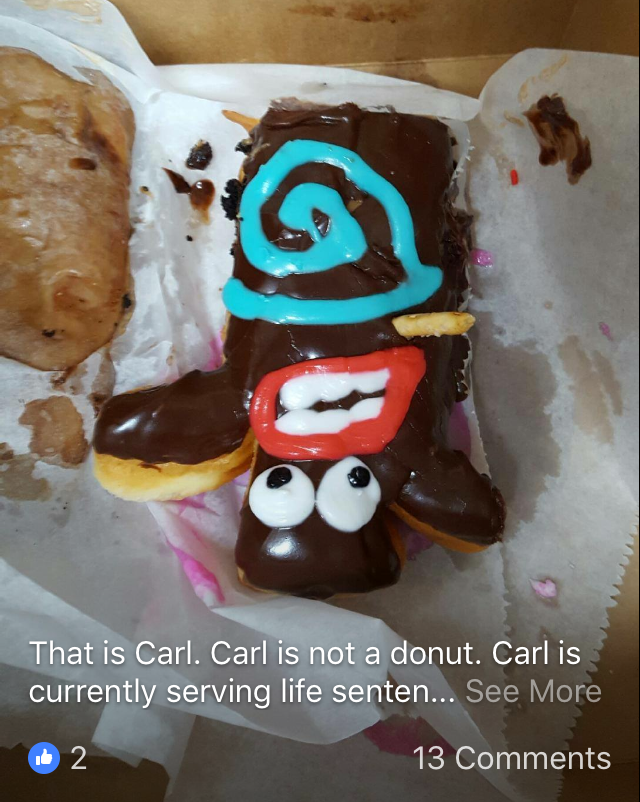
 Outlaw Creative
 Outlaw Creative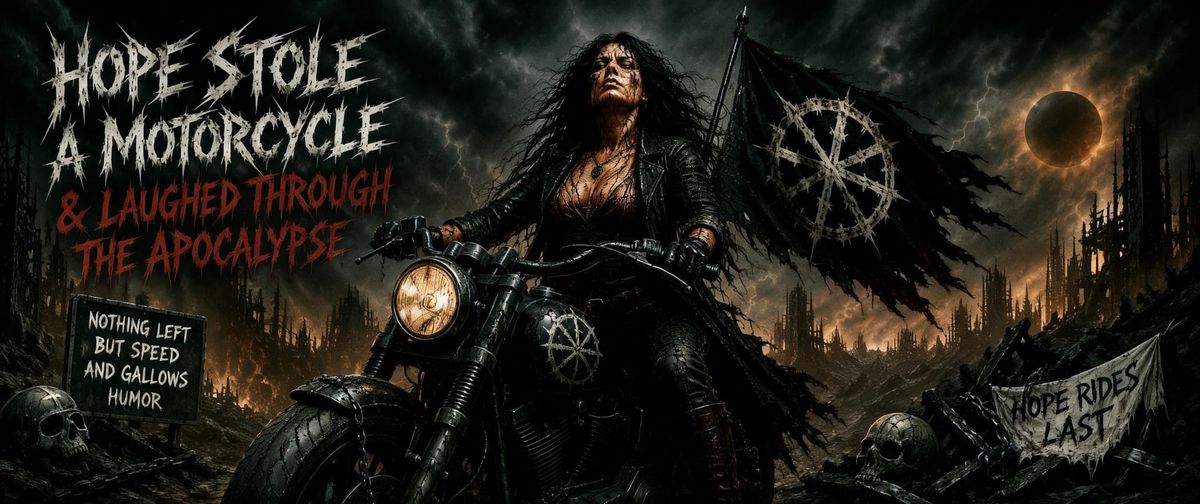
 Outlaw Creative