On The Angle Of The Voice

Rhythm / Pauses / Drops | Lyrics
Comfort
is not
evidence
of truth.
Truth doesn’t recline—
doesn’t dim the lights—
doesn’t stay
for dessert.
If everybody stays
it’s lying.
If nobody shifts
it missed.
Comfort says
remain.
Truth says
choose.
If you feel it
in your chest—
not your smile—
that’s the signal.
Comfort
is not
evidence
of truth.
Truth doesn’t recline—
doesn’t dim the lights—
doesn’t stay
for dessert.
If everybody stays
it’s lying.
If nobody shifts
it missed.
Comfort says
remain.
Truth says
choose.
If you feel it
in your chest—
not your smile—
that’s the signal.
Comfort
is not
evidence
of truth.
Truth doesn’t recline—
doesn’t dim the lights—
doesn’t stay
for dessert.
If everybody stays
it’s lying.
If nobody shifts
it missed.
Comfort says
remain.
Truth says
choose.
If you feel it
in your chest—
not your smile—
that’s the signal.
Comfort says
remain.
Truth says
choose.

Written In Dust (Cover Of: Power Of The Ox) - by: Caleb A. Nelson: AKA: @CeremonialDarkWave @ Suno
The wall did not whisper, it stood by the studs and counted
Every joist, every nail, every name pressed into the limewash
Hope said, “I hate you,” and I said, “I know”
Then watched the oil lamp gutter beside the hard bread like a kept vigil
There’s a crack in the tile by the fridge where the cold air gathers
A bread knife on the counter, still wet from yesterday’s cutting
I tried to sort the mail by hand, like a priest sorting clean from unclean
But each envelope opened like a small, signed indictment
The air goes thick with what you won’t confess
Every breath costs, every silence points us back
The floor gives way under all this weight
And we’re still standing where the split begins
Mene, Mene, Tekel, Upharsin
Written in dust on the frame of the door
If the kingdom gets measured
It’s your hand on the scale I’m waiting for
Mene, Mene, Tekel, Upharsin
Like the writing on the wall, He names your bones
Mene, Mene, Tekel, Upharsin
Each black mark you left gets read aloud
The wall takes the stand, it keeps the record
On splintered wood and the blood-stained floor
Mene, Mene, Tekel, Upharsin
When the verdict falls, it knows what you owe
Mene, Mene
The dust won’t lie
Tekel, Tekel
Don’t blink, don’t hide
Upharsin
The line has split
And the house keeps score with every brick
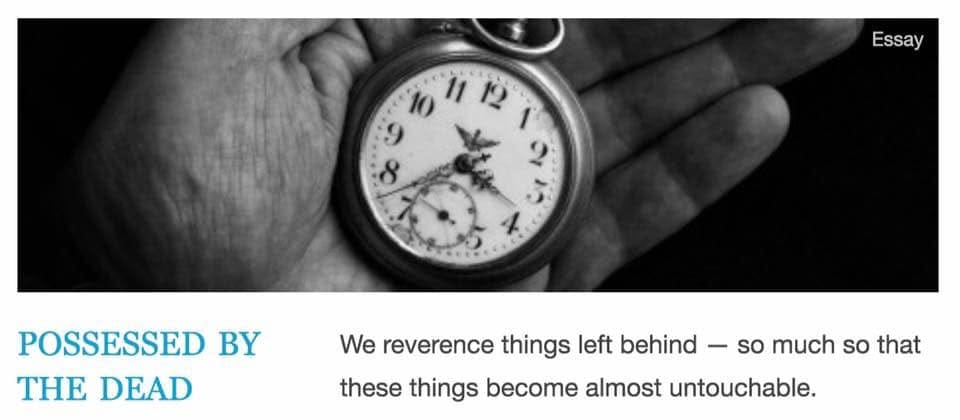
A pocket watch on the sink lost another minute
Tick, then gone, like breath through a cracked pipe
I wound it once, felt the brass go dead in my palm
Then the bulb caught your face like a witness and held it there
The scales are tipped, the wheat from the chaff divided
One name found wanting, one voice called out at the gate
I keep shifting the burden, as if that might hide it
But the judgment is cast, and it lands in this room the same
The earth groans beneath, the heavens bear witness
To every transgression, every whispered deceit
If this is the price for a life lived in blindness
Then let the stones cry out and name what you did to me
The wall did not whisper, it stood by the studs and counted
It marked you down and never once looked away
Mene, Mene, Tekel, Upharsin
The balance is settled, the sentence stays
No mercy in the plaster, no pardon in the frame
Just the house, and the count, and your name on the blame.

To speak is to draw a line in the dust. We are accustomed to thinking of the voice as a phenomenon of pure interiority made public—an ethereal, gaseous release of soul that dissolves into the air without leaving a trace. But this is a cartographic illusion. The voice is not a cloud; it is a vector. It possesses an axis, an inclination, a degree of deflection, and a highly specific angle of incidence.
To utter a sound is to launch a projectile into an already crowded room, establishing an immediate asymmetry between those who stand in the direct path of its acoustic beam and those who inhabit its silent margins.
The "angle of the voice" is the precise geometric orientation through which vocal energy is organized to claim, subdivide, and dominate space.
When we analyze this angle, we transition from a simple linguistics of meaning to an acoustic cartography of power. Space is never neutral; it is a highly contested grid of visibility and audibility, structured by what we must call spatial hegemony.
Whoever controls the angle of the voice controls the geometry of proclamation. By tracing this single, seemingly minute phenomenon—the physical and political tilt of the human utterance—we can map a vast, rhizomatic network of power relations that spans architecture, evolutionary biology, state surveillance, colonial history, and the digital domesticity of our contemporary world.
1. The Pulpit and the Amphitheater: Architectural Governance
In the classical theater of Epidaurus or the soaring nave of a Gothic cathedral, the angle of the voice is codified as stone. Here, architectural acoustics function as a primary technology of governance. The medieval pulpit is not merely elevated to ensure visibility; it is suspended at a precise mathematical angle above the congregation to optimize the downward propagation of the homily.
The priest’s voice does not diffuse democratically; it cascades. It is a directional beam of sonic territorialization that strikes the listener from above, transforming the physical sanctuary into an acoustic hierarchy.
In this spatial arrangement, the listener’s ear is caught in a posture of submission, tilted upward to receive the word.
This is the geometry of proclamation in its purest form: the architectural manipulation of vocal reflection to ensure that the sovereign voice remains coherent, singular, and unanswerable.
To speak from the pulpit is to use the stone canopy above one's head as an acoustic mirror, focusing the vocal energy into a weaponized beam that cuts through the ambient murmurs of the crowd. The angle of the voice, in this light, is the physical manifestation of the divine right of kings, translated into decibels and directional vectors.
2. The Singer’s Formant and the Colonization of Air
Long before the invention of the microphone, the Western operatic tradition confronted a formidable spatial obstacle: how to project a single human voice over a ninety-piece orchestra without drowning in the instrumental tide.
The solution was not found in sheer volume, but in a radical anatomical recalibration of the vocal tract—the discovery of the "singer's formant."
By lowering the larynx and widening the pharynx, the operatic singer shifts the resonant angle of their voice, creating an acoustic peak between 2,800 and 3,200 Hertz.
This frequency range matches the resonant frequency of the human ear canal, allowing the voice to slice through the dense wall of orchestral sound like a scalpel. This is not merely an artistic technique; it is an act of physical colonization. The singer's formant alters the spatial hegemony of the concert hall, carving out a private highway through the air.
The voice is tilted forward, concentrated into a narrow, piercing cone of sonic energy that claims the entire auditorium. It is a form of acoustic cartography that maps the limits of human hearing and forcibly expands them, demonstrating that even within the confines of aesthetic pleasure, the voice operates as a territorial engine.
3. Whispering Galleries and the Geometries of Espionage
In the circular gallery of St. Paul’s Cathedral in London, or the National Statuary Hall in Washington, D.C., the physics of sound reflection reveals a more insidious dimension of the vocal angle.
In these spaces, a low whisper uttered at a specific angle against the curved wall travels along the perimeter of the room, remaining perfectly audible to a listener positioned at the exact opposite side, while remaining completely silent to those standing in the center.
This acoustic anomaly transforms the architecture of statecraft into a machine for espionage. Here, the angle of the voice becomes a secret vector that bypasses the democratic space of open debate. The whispering gallery demonstrates that sound does not simply radiate outward in concentric circles; it can be guided, bent, and funneled to serve clandestine interests.
The spatial hegemony of the hall is subverted by a lateral whisper that hugs the masonry, proving that the most potent political alignments are often forged not in the loud center of assembly, but along the silent margins of the curve, where the voice is tilted toward the wall to escape public detection.
4. The Colonial Megaphone and the Acoustic Vector
The history of imperial expansion is often written in the language of cartography, weaponry, and law. Yet, it was equally a conquest of the ear. When colonial administrators stood before assembled populations in India, Africa, or the Caribbean, they did not merely speak; they deployed the acoustic megaphone. This simple, conical device does not simply amplify sound; it restricts its dispersion, narrowing the angle of the voice from a natural 120-degree arc to a highly focused, directional beam of high-intensity sound.
The megaphone functioned as an acoustic bayonet, establishing a clear line of demarcation between the colonizer and the colonized. To be caught in the direct path of this sonic beam was to be subjected to the immediate, overwhelming authority of the imperial state.
The megaphone transformed the open-air space of the colony into a disciplined classroom, where the native population was mapped not by physical borders, but by the reach and angle of the administrator’s voice.
This is echo-politics in its most visceral form: the use of acoustic technology to project a unilateral stream of command that brooks no reply, transforming the sonic environment into a site of permanent occupation.
5. Beamforming and the Domestic Panopticon
In the twenty-first century, the colonial megaphone has been inverted and miniaturized, finding a home in the sleek, unobtrusive chassis of the smart speaker.
Devices like the Amazon Echo or Google Home rely on an array of micro-electro-mechanical microphones and a digital signal processing technique known as "beamforming."
When a user utters a command from across the room, the device does not listen passively to the entire space. Instead, it calculates the phase differences between its various microphones to determine the exact angle of the incoming voice, digitally steering its listening sensitivity toward that specific point.
This is the birth of the domestic panopticon, structured not by sight, but by acoustic cartography. The smart speaker maps the living room in real-time, calculating the coordinates of the human throat to extract data. The angle of the voice is no longer a means of human expression; it is a coordinate to be tracked, commodified, and fed into the algorithms of surveillance capitalism.
The spatial hegemony of the home is subtly surrendered to a device that knows exactly where you stand, how you tilt your head when you speak, and how to isolate your voice from the ambient noise of domestic life.
6. Bioacoustic Demarcation: The Avian Border
The political utility of the vocal angle is not a human invention; it is deeply rooted in the evolutionary history of the animal kingdom.
Consider the territorial songs of passerine birds.
When a male songbird perches on a branch to sing, he does not broadcast his message indiscriminately to the forest. He constantly rotates his body, tilting his beak upward and downward, shifting the angle of his voice to map and defend his ecological niche.
This bioacoustic demarcation is an active form of border control. The bird’s song is a directional acoustic fence; any rival male entering the cone of sound is immediately warned of a territorial violation.
By altering the pitch and angle of his song, the bird can make himself sound larger or closer than he actually is, using the acoustic properties of the forest canopy to project an illusion of omnipresence.
The forest is thus revealed not as a neutral green space, but as a complex, overlapping grid of acoustic territories, where survival depends on one’s ability to project a voice at the correct angle to ward off intruders without attracting predators.
7. The Hydro-Acoustic Deep: Cold War Submarines
To understand how the angle of the voice operates in the absence of air, we must descend into the crushing depths of the world’s oceans.
During the Cold War, the Atlantic and Pacific oceans were transformed into silent battlefields mapped entirely by acoustic cartography. Submarines, running silent to avoid detection, relied on passive sonar arrays to listen for the "voice" of enemy vessels—the distinct acoustic signature of their engines, propellers, and internal machinery.
In this dark, pressurized world, sound does not travel in straight lines.
Due to variations in temperature, pressure, and salinity, sound waves bend, creating acoustic "shadow zones" where a submarine can hide in plain sight. Navigators had to calculate the exact angle at which their vessel's acoustic emissions would strike these thermal layers, using them as shields to reflect their sound away from enemy hydrophones.
The ocean floor became a labyrinth of acoustic canyons and acoustic mirrors, where the "angle of the voice" (or the angle of the engine's rumble) determined whether a crew lived or died.
This is the ultimate expression of spatial hegemony: a silent, underwater chess game where geography is written in the refraction of sound waves through salt water.
8. Noise Ordinances and the Cartography of Gentrification
In the modern metropolis, the angle of the voice is regulated by the municipal code. The rise of noise ordinances in gentrifying urban neighborhoods is a prime example of how dominant social classes use acoustic cartography to enforce spatial hegemony.
When a historic open-air market, a street performer, or a neighborhood block party is silenced by police intervention, it is because their vocal and musical emissions have crossed an invisible, legally defined boundary.
These ordinances are designed to protect the "acoustic property rights" of wealthy residents, who demand a silent, sterile environment.
The city is divided into zones of permissible decibels, where the voices of marginalized communities are coded as "noise" and systematically suppressed.
The angle of the voice, in this context, is a class marker.
The wealthy speak in low, controlled, interior angles—the muffled tones of the boardroom, the restaurant, the private gallery—while the working class is forced to use wide, public, exterior angles to make themselves heard.
By regulating the volume and direction of public utterance, the state actively shapes the demographic landscape of the city, ensuring that only certain voices are allowed to resonate in the public square.
9. The Guillotine’s Echo: The Acoustic Architecture of Terror
During the French Revolution, the architecture of the public square was radically reconfigured to accommodate a new kind of political theater: the guillotine.
The execution of a monarch or an enemy of the state was not merely a visual spectacle; it was a profound acoustic event. The design of the scaffold was carefully calculated to ensure that the final words of the condemned—and the mechanical thud of the blade—were projected with maximum clarity to the assembled crowd.
However, the revolutionary tribunals also feared the power of the condemned’s voice to incite riot. At the execution of Louis XVI, Santerre, the commander of the National Guard, ordered a drum roll to drown out the king’s final words to the crowd.
This was a violent intervention in the angle of the voice.
By flooding the acoustic space with the chaotic, omnidirectional noise of snare drums, the state severed the connection between the speaker and the listener. The king’s voice was stripped of its directional power, swallowed by a wall of state-sanctioned noise. This historical moment illustrates that the control of the vocal angle is a matter of life and death; when the sovereign can no longer project his voice to his subjects, his sovereignty is already dead.
10. Hominid Laryngeal Descent and the Horizon
Finally, we must look to the very bones of our ancestors to understand the primordial origin of the vocal angle. The evolutionary transition from early hominids to Homo sapiens was marked by a profound anatomical shift: the descent of the larynx. In most mammals, the larynx is positioned high in the throat, allowing them to breathe and swallow simultaneously. In humans, the larynx descended, creating a two-tube vocal tract with a flexible tongue positioned at a right angle to the vocal cords.
This anatomical mutation was a high-risk evolutionary gamble, as it made humans uniquely vulnerable to choking. Yet, it offered a monumental advantage: it allowed for the production of a wide range of vowel sounds and, crucially, it altered the angle of vocal projection. The human voice was no longer restricted to a narrow, nasal honk; it could now be projected forward, outward, and downward with unprecedented precision. This anatomical shift changed our relationship with the horizon. The descended larynx allowed early humans to project their voices across vast savannahs, coordinating hunts and establishing complex social structures over distance. The angle of the voice became our primary tool for mapping the horizon, transforming us from creatures who reacted to the environment into creatures who actively sculpted it through sound.
Synthesis: The Rhizome of the Utterance
To trace the angle of the voice is to realize that the human utterance is never a solitary act of communication; it is a spatial intervention. Whether we are looking at the stone architecture of a cathedral, the digital algorithms of a smart speaker, the territorial songs of birds, or the silent maneuvering of Cold War submarines, we find the same fundamental truth: sound is a weapon of space.
The aphorism "On The Angle Of The Voice" demands that we abandon our naive, romantic view of speech as pure spirit. We must learn to see the voice as a physical entity that possesses weight, direction, and geopolitical consequence. In a world increasingly dominated by invisible networks of surveillance and control, the ability to understand, manipulate, and reclaim the angle of our own voices is not merely an aesthetic choice—it is a vital act of resistance. To change the angle of the voice is to change the map of the world.
Epilogue:
What is a panopticon?
The Panopticon is an institutional design proposed by English philosopher Jeremy Bentham in the late 18th century. It features a central observation tower situated within an outer ring of cells. Because the guards can see the inmates, but the inmates cannot see the guards, prisoners never know exactly when they are being watched.
Because this state of constant, unverifiable surveillance makes it impossible to know if a guard is present, individuals are forced to assume they are always being monitored. Over time, this uncertainty causes subjects to internalize the rules and regulate their own behavior. Ultimately, inmates become their own wardens, and discipline is maintained automatically without requiring constant, direct force.
Hegemony, defined:
Hegemony is the dominance or leadership of one social group, state, or nation over others. Rather than relying purely on military force, a hegemon rules by shaping the social, cultural, and political norms so that subordinate groups accept the status quo as natural and beneficial.
Types of Hegemony
Political & Military: A super-power nation enforces global rules through economic leverage and military treaties.
Cultural: A dominant group shapes society's values, beliefs, and perceptions through media, religion, and language.
Economic: A wealthy class or nation controls global markets, trade policies, and financial systems to maintain its wealth.
Gramsci's Cultural Hegemony
Italian philosopher Antonio Gramsci expanded this term in his Prison Notebooks. He argued that the ruling class maintains power not just through state violence, but by winning "consent." By controlling cultural institutions like schools and media, they make their own worldview the "common sense" of everyone else, preventing rebellion before it can even start.

Rhythm / Pauses / Drops | Lyrics
Comfort
is not
evidence
of truth.
Truth doesn’t recline—
doesn’t dim the lights—
doesn’t stay
for dessert.
If everybody stays
it’s lying.
If nobody shifts
it missed.
Comfort says
remain.
Truth says
choose.
If you feel it
in your chest—
not your smile—
that’s the signal.
Comfort
is not
evidence
of truth.
Truth doesn’t recline—
doesn’t dim the lights—
doesn’t stay
for dessert.
If everybody stays
it’s lying.
If nobody shifts
it missed.
Comfort says
remain.
Truth says
choose.
If you feel it
in your chest—
not your smile—
that’s the signal.
Comfort
is not
evidence
of truth.
Truth doesn’t recline—
doesn’t dim the lights—
doesn’t stay
for dessert.
If everybody stays
it’s lying.
If nobody shifts
it missed.
Comfort says
remain.
Truth says
choose.
If you feel it
in your chest—
not your smile—
that’s the signal.
Comfort says
remain.
Truth says
choose.
 Outlaw Creative
 Outlaw Creative
 Outlaw Creative