The Cartography Of The Verbal Trench — On The Warlanguage And The Rhizome Of Semiotic Insurgency
The Art & The Act Of The Warlanguage | Lyrics
They didn’t take the tower down,
They just renamed the wind.
They took the howl out of the wolf
And made it safe to spin.
They didn’t ban your questions—
Just made the answers thin.
Then handed you a script to read,
And told you truth begins within.
They paved the roads with promises,
And billboards full of light.
They told you that your pain was wrong,
Your anger, impolite.
They didn’t steal your memories—
They made you doubt your sight.
Then thanked you for your loyalty
As you vanished overnight.
The word came first, and then the rule.
They built a school to make you cool.
Then clipped your tongue and trained your thought—
Until you said what you were taught.
No cage, no cell, no chains, no scream—
Just fewer colors in your dream.
No violence here, just grammar games.
Until your prayers all sounded the same.
They didn’t break the poets’ hands—
They paid them to write safe.
Turned rebels into hosts of shows,
And risk into escape.
They offered peace in sterile rooms,
And masks for every face.
And called it growth when no one moved,
And called it grace when we obeyed.
You’ll find no blood beneath the screen,
No echo in the phrase.
Just narrowed hearts, and lowercase gods,
And all the saints replaced.
And still we say it isn’t war—
Because the streets are clean.
But war was never bullet-shaped—
It started in a dream.
The word came first, and then the chains.
The rest was ink. The rest was games.
They made the scream a metaphor,
And told you not to feel it more.
No flags, no guns, no marching feet—
Just empty eyes and endless screens.
And every thought you once believed,
Now sits behind a loading screen.
So whisper loud while you still can.
Say something they won’t understand.
And if your voice begins to shake—
It means there’s something still awake.
No need to shout, no need to fight—
Just hold your words beyond the night.
For words, you see, can burn and bite—
Or tear the veil and birth the light.
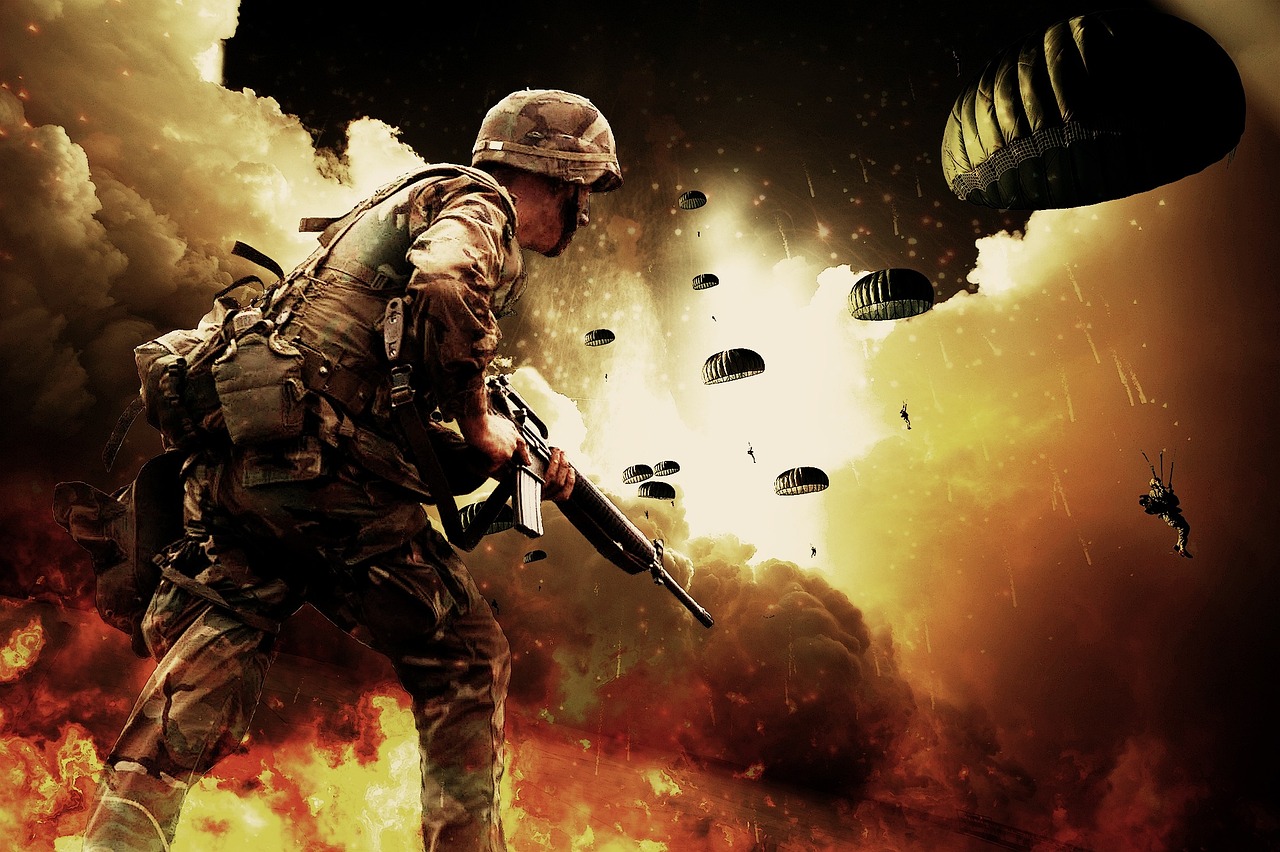
To speak is to position oneself within a field of fire. For too long, we have nurtured the comforting illusion that language is a neutral medium—a pristine pane of glass through which we observe reality, or a passive bucket into which we pour our thoughts. This is a dangerous, perhaps fatal, naivety. Language is not a mirror; it is a weapon system. It is an active, mutating, and highly contested terrain of conflict. Every noun is a claim of ownership; every verb is an exercise of force; every adjective is a tactical deployment of value.
When we speak of "Warlanguage," we are not merely referring to the vulgarity of military jargon, the sterile euphemisms of defense ministries, or the belligerent rhetoric of demagogues. We are referring to something far more pervasive and insidious: the systemic weaponization of the semantic field itself. Warlanguage is the transformation of the logos into an engine of division, classification, and cognitive enclosure. It is the linguistic infrastructure of domination that seeks to reduce the infinite complexity of human experience into binary coordinates of friend and foe, asset and liability, victor and vanquished.
To understand the Warlanguage is to recognize that we are all, by default, conscripts in an invisible war of meanings. The battlefields of the twenty-first century are not merely physical landscapes of soil and steel; they are the neural pathways of our collective consciousness, mapped and contested through the words we are permitted to use, the frameworks we are forced to adopt, and the concepts we are prevented from imagining.
To resist this conscription, we cannot simply retreat into silence, nor can we fight back using the heavy, linear artillery of the oppressor’s tongue. Instead, we must turn our gaze downward and outward, adopting a strategy of lateral expansion—a rhizomatic resistance that bypasses the vertical hierarchies of the Warlanguage, spreading horizontally through the cracks of the dominant discourse to cultivate new, untamable terrains of thought and solidarity.
I. The Anatomy of Warlanguage: Semantic Enclosure and Cognitive Colonization
At its core, the Warlanguage operates through a process of semantic enclosure. Much like the historical enclosure movements that fenced off the commons of England, transforming shared pastures into private assets, the Warlanguage seeks to fence off the conceptual commons of humanity. It takes the wild, polyphonic possibilities of human expression and subjects them to a violent process of standardization, categorization, and monetization.
Consider the modern lexicon of the corporate-state apparatus. We no longer have "workers" or "citizens"; we have "human resources," "human capital," and "end-users." We no longer have "communities"; we have "target demographics" and "market segments." This is not merely a shift in style; it is an ontological coup d'état. By renaming a human being as a "resource," the Warlanguage pre-emptively strips that being of intrinsic dignity, converting them into an extractable asset whose value is determined solely by their utility to the machine. This is the Sapir-Whorf hypothesis weaponized on an industrial scale: if you can control the limits of a population's vocabulary, you can control the limits of their political and existential imagination.
Furthermore, the Warlanguage is characterized by the violence of the preemptive euphemism. It is a linguistic shield designed to deflect moral accountability. When civilian deaths become "collateral damage," when torture is rebranded as "enhanced interrogation," and when the systemic destruction of ecosystems is masked behind the sterile corporate prose of "carbon offsets" and "green initiatives," language ceases to be a vehicle for truth. It becomes a camouflage netting thrown over the machinery of violence.
This linguistic camouflage operates through what the philosopher Ludwig Wittgenstein called "language-games," but in the context of the Warlanguage, these games are played for keeps. The rules are rigged. The vocabulary is curated by think tanks, algorithms, and public relations firms to ensure that certain critiques cannot even be formulated. How do you protest the extraction of your labor when the only language available to you is the language of "efficiency" and "productivity"? How do you defend the sacred when the dominant lexicon only recognizes that which can be quantified, priced, and traded on a futures market?
This is cognitive colonization. It is the occupation of the inner life by foreign terminologies. When we internalize the Warlanguage, we begin to view ourselves through the eyes of the occupier. We optimize our personalities, we brand our identities, we treat our relationships as transactions, and we view our anxieties not as rational responses to a dysfunctional world, but as "inefficiencies" to be chemically or behaviorally corrected. The Warlanguage does not need to deploy tanks to our streets if it can deploy its syntax to our minds.
II. The Rhizome versus the Obelisk: A Deleuzian Framework of Resistance
How do we contest a war that is waged within the very medium of our thoughts? To answer this, we must abandon the traditional models of resistance, which are themselves too often infected by the hierarchical logic of the Warlanguage. We cannot defeat the vertical power of the state or the corporation by building our own counter-monoliths. To oppose an obelisk with another obelisk is merely to validate the architecture of the monument.
Instead, we must look to the botanical world, specifically to the concept of the rhizome, as articulated by Gilles Deleuze and Félix Guattari.
An ordinary tree is hierarchical and arborescent; it has a central trunk, deep roots, and branches that extend upward in a predictable, vertical progression. The tree is the model of the Warlanguage: centralized, bureaucratic, authoritarian, and anchored in a singular, unquestionable origin of authority.
A rhizome, by contrast, is a subterranean stem system—like ginger, bamboo, or couch grass—that grows horizontally, sending out roots and shoots from any of its nodes. It has no center, no single point of origin, and no defined boundary. If you cut a rhizome, it does not die; it simply mutates, branching off in new directions, reconnecting elsewhere, and continuing its lateral expansion beneath the surface of the soil.
Arborescent (The Warlanguage)       Rhizomatic (The Semiotic Insurgency)
          [Authority]                         *---*     *---*
               |                             /     \   /     \
        [Bureaucracy]                       *       *-*       *
         /     |     \                     / \     /   \     / \
     [Node]  [Node]  [Node]               *   *---*     *---*   *
To apply a rhizomatic lens to linguistics is to recognize that meaning does not flow downward from the academy, the dictionary, or the executive decree. Meaning is cultivated horizontally through the lived, daily interactions of communities, subcultures, and marginalized groups. While the Warlanguage attempts to construct a rigid, arborescent tower of standardized definitions, the living language remains a chaotic, underground rhizome, constantly sprouting new slang, dialetical variations, ironic reversals, and poetic detours.
The rhizome is the natural enemy of the Warlanguage because it cannot be targeted by conventional means. You cannot bomb a network that has no headquarters. You cannot assassinate a vocabulary that has no author. You cannot co-opt a movement whose signifiers are constantly shifting, drifting, and mutating.
Where the Warlanguage seeks enclosure, the rhizome practices deterritorialization—the constant breaking of boundaries, the spilling over of meaning, and the refusal to be contained within the sterile categories of the dominant order. It is the lateral expansion of the semantic field, creating a width of expression that the narrow, vertical structures of power can neither comprehend nor control.
III. The Dynamics of Semiotic Warfare: Memetics, Algospeak, and Minor Literatures
In the contemporary digital landscape, the clash between the arborescent Warlanguage and the rhizomatic linguistic insurgency has reached a fever pitch. We see this play out in three distinct but interconnected arenas: the rise of memetics, the evolution of "algospeak," and the persistent power of what Deleuze and Guattari termed "minor literatures."
1. Memetic Warfare and the Viral Signifier
The modern internet is a hyper-accelerated laboratory of rhizomatic linguistics. Within this space, the "meme" has emerged as a primary tactical unit of semiotic warfare. A meme is not merely a humorous image with a caption; it is a highly compressed, viral packet of cultural meaning that bypasses traditional editorial gatekeepers and cognitive defense mechanisms.
Unlike the slow, ponderous propaganda of the twentieth century, which relied on state-controlled television and print media, memetic warfare operates laterally. It is decentralized, participatory, and highly adaptive. A meme is launched into the digital wild, where it is immediately seized upon, modified, remixed, and redistributed by thousands of anonymous actors.
In this sense, the meme is the ultimate rhizomatic entity. It has no single author; it is an assemblage of collective anxieties, ironies, and aspirations.
When the state or corporate apparatus attempts to co-opt a meme (a process of reterritorialization), the rhizome responds by mutating the meme, wrapping it in layers of post-irony, meta-commentary, and absurdity until it becomes toxic or useless to the advertisers and politicians who sought to exploit it. The lateral width of memetic culture allows it to outrun the slow-moving, vertical regulatory frameworks of the Warlanguage.
2. Algospeak and the Art of the Semantic Slip
We see another manifestation of rhizomatic resistance in the phenomenon of "algospeak"—the algorithmic vernacular developed by internet users to bypass automated content moderation systems. On platforms governed by strict, corporate-designed algorithms that censor words related to mental health, sexuality, violence, or political dissent, users do not submit to silence. Instead, they invent a parallel, lateral vocabulary.
"Suicide" becomes "sewerslide." "Kill" becomes "unalive." "Prostitute" becomes "accountant."
This is not merely a clever game of cat-and-mouse; it is a profound demonstration of the resilience of the linguistic rhizome. It proves that human communication cannot be fully enclosed by the digital panopticon.
When the algorithmic guardians of the Warlanguage attempt to prune the linguistic tree by banning specific nodes of vocabulary, the rhizome simply grows around the obstacle, creating new, lateral pathways of communication. Algospeak is a modern form of canti, argot, or thieves' cant—the historical secret languages developed by criminals, vagabonds, and revolutionaries to speak freely in the presence of the gallows. It is a reminder that the margins of society will always produce the linguistic tools necessary to evade the gaze of the center.
3. Minor Literatures: Deterritorializing the Major Tongue
To wage a successful semiotic insurgency, we must also understand the power of "minor literatures." Deleuze and Guattari defined a minor literature not as a literature written in a minority language, but rather as "that which a minority constructs within a major language." The classic example is Franz Kafka, a Czech Jew writing in German, or James Joyce, an Irish subject writing in the language of the British Empire.
A minor literature does not seek to create a new, pure language; instead, it enters the dominant, major language and hollows it out from the within. It stretches the syntax, corrupts the vocabulary, introduces foreign rhythms, and forces the language of power to express things it was never designed to say. It is a process of linguistic sabotage.
Major Language (Rigid, Monolithic, Imperial)
      ↓ (Infiltration by Minor Literature)
De-territorialized Language (Fluid, Subversive, Hybridized)
When post-colonial writers write in English or French, but infuse those languages with the syntax, mythologies, and oral traditions of their ancestors, they are deterritorializing the imperial tongue. They are turning the Warlanguage against itself. They are forcing the language of the master to bear witness to the pain of the slave.
This lateral expansion of the major language from within prevents it from remaining a sterile instrument of administrative control. It injects a wild, uncontrollable polyphony into the heart of the empire.
IV. The Violence of the Binary: Epistemic Reductionism and the Cult of the Metric
One of the most devastating weapons in the arsenal of the Warlanguage is the enforcement of epistemic reductionism—the systematic flattening of reality into simplistic, binary choices. This is the ultimate anti-rhizomatic move.
Where the rhizome is characterized by the "and... and... and..." (multiplicity, connection, variation), the Warlanguage is characterized by the "either/or" (exclusion, polarization, conflict).
In the theater of political discourse, this binary logic is used to manufacture consent and eliminate the possibility of alternative futures. You are either with us or you are with the terrorists. You are either a capitalist or a communist. You are either for progress or you are a Luddite.
This binary structure is not designed to foster debate; it is designed to prevent thought. It forces the individual to choose between two pre-packaged, state-sanctioned identities, both of which are ultimately subservient to the same underlying power structure.
This binary reductionism has reached its zenith in the age of the algorithm and the metric. Today, we are subjected to a relentless cult of the metric, where every aspect of human life is translated into numerical values.
Our social standing is measured in followers and engagement rates. Our productivity is measured in key performance indicators (KPIs). Our health is measured in steps taken and calories burned. Our emotional states are tracked, categorized, and monetized by surveillance capitalism.
This metricization is a form of linguistic violence. It translates the qualitative richness of human existence into the quantitative, binary language of the computer. It is a language that knows only 1s and 0s, assets and liabilities, inputs and outputs.
When we accept this metricized language, we commit a form of epistemic self-harm. We agree to view ourselves as data points in an ongoing optimization simulation. We lose the ability to speak of that which cannot be measured: beauty, grief, solidarity, wonder, and love.
The Warlanguage loves the metric because the metric is easily managed, predicted, and policed. It hates the qualitative, the poetic, and the ambiguous because these things are inherently rhizomatic—they spill over the edges of the spreadsheet, resisting categorization and defying control.
V. A Call to Linguistic Disobedience: Cultivating the Wild Semiotic Garden
The hour is late, and the trenches of the Warlanguage are deep. We are bombarded daily by a relentless stream of manufactured jargon, algorithmic noise, and polarizing rhetoric designed to keep us docile, divided, and distracted.
If we are to survive as autonomous, thinking beings, we must declare a state of linguistic disobedience. We must refuse to be passive consumers of the standardized lexicons handed down to us by the corporate-state apparatus. We must become linguistic saboteurs, semantic guerrillas, and cultivators of a wild, untamable semiotic garden.
How do we wage this lateral, rhizomatic campaign? What are the practical steps of a semiotic insurgency?
1. Reclaim the Ambiguous and the Unquantifiable
First, we must wage a war of defense on behalf of the qualitative. We must stubbornly refuse to translate our lives, our relationships, and our values into the sterile language of metrics and optimization.
Let us stop talking about our "personal brands" and start talking about our souls. Let us stop treating our friendships as "networks" and start treating them as sacred alliances. Let us reject the corporate demand for "efficiency" and embrace the revolutionary potential of "slowness," "idleness," and "reverie."
We must cultivate a vocabulary of nuance, ambiguity, and paradox. The Warlanguage demands clarity, but it is the clarity of the prison yard.
We must counter this with the rich, fertile dusk of the poetic. We must speak in metaphors that cannot be parsed by algorithms. We must tell stories that cannot be reduced to a 280-character summary. We must insist on the complexity of the human condition, refusing to let our identities be flattened into binary checkboxes.
2. Practice Semantic Drift and Concept Sabotage
Second, we must actively sabotage the vocabulary of the oppressor. We must practice semantic drift—the deliberate, playful, and subversive alteration of established meanings.
When the state speaks of "national security," we must redefine security to mean the health, housing, and happiness of our neighbors. When the corporation speaks of "disruption," we must disrupt their profits with our solidarity. When the economists speak of "growth," we must expose it as the cancer of infinite accumulation on a finite planet.
This is the art of detournement—a concept developed by the Situationist International, which involves taking the slogans, logos, and symbols of the dominant culture and turning them against their creators.
We must hijack the Warlanguage, hollow out its terrifying terms, and fill them with radical, liberating content. We must make their words slip, slide, and fail them when they try to deploy them against us.
Dominant Concept: "Productivity" (Extraction of Labor)
      ↓ (Detournement / Semantic Drift)
Subversive Concept: "Productivity" (Creation of Community, Art, and Joy)
3. Cultivate Minor Dialects and Intimate Patois
Third, we must look laterally to our immediate communities and cultivate our own local, intimate dialects. Every family, every neighborhood, every subculture, and every affinity group should have its own secret language—a unique patois of inside jokes, localized idioms, and shared mythologies that cannot be understood or exploited by outsiders.
These intimate languages are the root-nodes of the linguistic rhizome. They create a protective buffer of incomprehensibility around our relationships, shielding them from the predatory gaze of algorithmic capitalism.
They allow us to speak to one another without being overheard by the machine. By multiplying these minor dialects, we fragment the monolithic authority of the major tongue, creating a vibrant, decentralized mosaic of human voices that can never be unified under a single banner of command.
4. Embrace the Poetic as a Political Weapon
Finally, we must recognize that poetry is not a luxury, nor is it a polite academic exercise. Poetry is the ultimate form of linguistic resistance. It is the site where language is liberated from its duty to serve as an instrument of transaction, administration, and war.
A poem is a declaration of independence from the pragmatic. It is a space where words are allowed to dance, collide, and explode into new, unforeseen constellations of meaning.
When we write, read, and share poetry, we are actively dismantling the Warlanguage. We are training our minds to think outside the binary trenches. We are exercising our capacity for deep empathy, radical imagination, and wild, unbiddable hope.
The poet is the ultimate rhizomatic gardener, planting seeds of linguistic rebellion that can lie dormant in the cultural soil for years, only to sprout suddenly, breaking through the concrete of authoritarian regimes and corporate monopolies.
VI. Conclusion: The Open Horizon of the Logos
The struggle against the Warlanguage is not a battle that can be won with a single, decisive victory. It is an ongoing, daily practice of vigilance, creativity, and lateral connection.
The forces of enclosure will always attempt to build new fences; the architects of the state will always attempt to erect new obelisks; the designers of the algorithms will always attempt to draft new, restrictive syntaxes.
But beneath the concrete of their highways, beneath the foundations of their monuments, and beneath the optical fibers of their networks, the rhizome remains alive. It is a vast, interconnected web of human laughter, grief, rebellion, and love, whispering in a thousand different dialects, singing in a hundred different keys, and writing in a dozen different alphabets.
Let us abandon the vertical trenches of their wars. Let us stop marching to the rhythm of their commands.
Instead, let us slip sideways into the underground. Let us connect our roots, expand our branches, and spread laterally across the earth.
Let us reclaim our language, and in doing so, let us reclaim our world. For the logos is not a weapon to be owned by the powerful; it is an open, wild, and infinite horizon that belongs to us all.
 Outlaw Creative
 Outlaw Creative
 Outlaw Creative