Hope & The Logic Of Violence & Seduction


Hope is dangerous because it knows the room is dangerous.
That is the first correction. Hope is not naïve. Hope is not innocence wearing clean clothes. Hope is not the little decorative belief that life is secretly kind if we squint hard enough. Hope begins after that illusion has already been damaged. It does not arrive because the world is harmless. It arrives because the world is not harmless, because rooms close, because voices bend, because pain persuades, because despair does not merely hurt a person but argues with them.
Despair has rhetoric. That matters. Despair is not only a feeling; it is a speaker. It makes claims. It builds a case. It says, “Look at the evidence.” It says, “Look how long this has gone on.” It says, “Look how many times the door did not open.” It does not usually begin as a monster. It begins as a reasonable-sounding accountant of injury. It counts the losses, arranges them in rows, and then quietly adds the false conclusion: therefore nothing remains.
That is where the logic of seduction enters.
Seduction is not merely erotic. Seduction is any arrangement by which the soul is drawn toward surrender while believing it is choosing relief. Despair seduces by offering an end to effort. It says, “Stop fighting. Stop expecting. Stop asking the room to be more than it is. Stop being disappointed.” There is a terrible comfort in that. Hopelessness can feel restful because it cancels expectation. It lowers the ceiling and calls the smaller room mercy.
This is why hopelessness can be persuasive.
It does not always feel like collapse. Sometimes it feels like maturity. It says, “I am just being realistic.” It says, “I have learned.” It says, “I no longer believe in childish things.” And there, right there, is the seduction: despair disguises itself as wisdom. It makes exhaustion sound like insight. It makes numbness sound like discipline. It makes surrender sound like peace.
Violence enters when seduction alone is not enough.
At first, despair invites. Then it confines. The seduction says, “Come rest here.” The violence says, “Now stay.” This is the basic architecture of capture. The soul is not usually dragged into captivity at gunpoint. It is coaxed. It is flattered. It is tired. It is promised relief from the burden of wanting anything. Then, once the doors are closed, the arrangement hardens. The person begins to believe the cage is not a cage but the shape of reality itself.
The logic of violence and seduction is therefore a two-step machine: first enchantment, then enforcement.
Seduction narrows the field of possible motion; violence punishes attempts to widen it again. Seduction says, “This is what you want.” Violence says, “This is all you get.” Together, they create a world where refusal feels irrational.
Hope understands this machine because hope is born in conflict with it.
That is why hope cannot remain sentimental. Sentimental hope is too weak for a captured room. It smiles at the cage and says, “Maybe one day.” Real hope studies the lock. Sentimental hope tells the prisoner to stay positive. Real hope asks where the hinge is. Sentimental hope offers comfort without interruption. Real hope brings interruption as comfort.
Here is the paradox: hope must use force without becoming domination.
It must oppose violence without pretending force is evil in itself. A surgeon cuts. A rescuer breaks glass. A midwife applies pressure. A builder tears down a rotten beam so the house can stand. Not all breaking is destruction. Some breaking is the condition of release.
This is where disciplined violence becomes necessary.
Hope is violent against false finality. Not against the person. Not against the wounded self. Not against the one who has grown tired. Hope’s violence is directed toward the lie that has fastened itself to the living. The lie says, “You are done.” Hope cuts there. The lie says, “Nothing else can happen.” Hope strikes there. The lie says, “Your pain is the final interpreter of your life.” Hope puts a blade through that sentence.
But hope must be disciplined because liberation can easily imitate the thing it fights.
The rescuer can become the conqueror. The righteous blow can become appetite. The desire to free can become the desire to win. That is why moral force matters. Moral force is what keeps hope from becoming mere rage. It gives hope an object worthy of its strength: life, truth, motion, breath, return, repair.
Hope’s violence is not revenge.
Revenge remains fascinated by the captor. Hope is not. Hope is interested in the door. Revenge wants the enemy to feel pain. Hope wants the prisoner outside. Revenge is still bound to the scene of injury. Hope is already measuring the road beyond it.
Seduction also has to be answered, and not only by force.
This is harder. You cannot simply beat seduction with a hammer, because seduction lives inside desire. It has touched the imagination. It has made captivity feel familiar. It has trained the person to mistrust open air. So hope must possess its own counter-seduction.
This does not mean hope lies.
Hope’s seduction is not deception. It is attraction toward truth. It says, “There is more than this.” It says, “Come and see.” It says, “You do not have to love the cage just because you learned its measurements.” Hope makes freedom desirable again.
That is no small thing.
A person can become afraid of freedom. Freedom requires motion, decision, uncertainty, responsibility. Captivity, for all its horror, can become organized. You know where the walls are. You know the daily humiliations. You know the rules. Hope disrupts that grim familiarity. It says the terrible thing: you may have to move.
So hope seduces toward movement.
Not with false promises. Not with “everything will be easy.” That is cheap. Hope’s true invitation is rougher: “You are not finished. Stand up.” There is tenderness in it, but the tenderness has a spine. Hope does not say, “Nothing bad happened.” Hope says, “Something bad happened, and still it does not own the whole field.”
This is why speed matters — capture is fast.
A thought darkens quickly. Shame seals quickly. A person can be persuaded into despair before they know a persuasion has taken place. The room changes pressure; the body believes it; the mind writes doctrine around the pressure. Hope has to move before the doctrine hardens. It has to arrive before “I feel trapped” becomes “I am trapped,” before “this hurts” becomes “this is all,” before “I am tired” becomes “I am done.”
Hope is not frantic, though.
Speed without discipline is panic. Hope’s speed is exact. It moves like a hand catching a falling glass. Not because the hand hates gravity, but because the glass still matters. Hope moves quickly because life is breakable.
Sonic truth is the recognition system.
This may be the deepest part. The lies of violence and seduction often work through sound before they work through argument. They have a tone. They sound inevitable. They sound smooth. They sound like the voice of someone who has finally understood the world. “Nothing changes.” “People are what they are.” “You should have known better.” “No one is coming.” These sentences do not persuade only by logic; they persuade by rhythm. They become familiar music.
Hope must therefore have a sound of its own.
Not decoration. Not prettiness. Ring. Weight. A true line does not merely state; it strikes. It enters the ear and finds the body. The body says, “There. That.” Sonic truth is the moment before explanation when recognition happens. It is why certain sentences rescue more than paragraphs of advice. “This is not the whole story.” “You are not done.” “Stand up.” “Breathe first.” These are not complicated, but if the sound is true, they carry force.
The logic of violence and seduction wants to control the music of the room.
It wants the bass note to be inevitability. It wants every object to hum the same verdict. Hope changes the key. Sometimes quietly. Sometimes brutally. But it changes the key.
That is why hope is a different kind of beast — it is not outside danger.
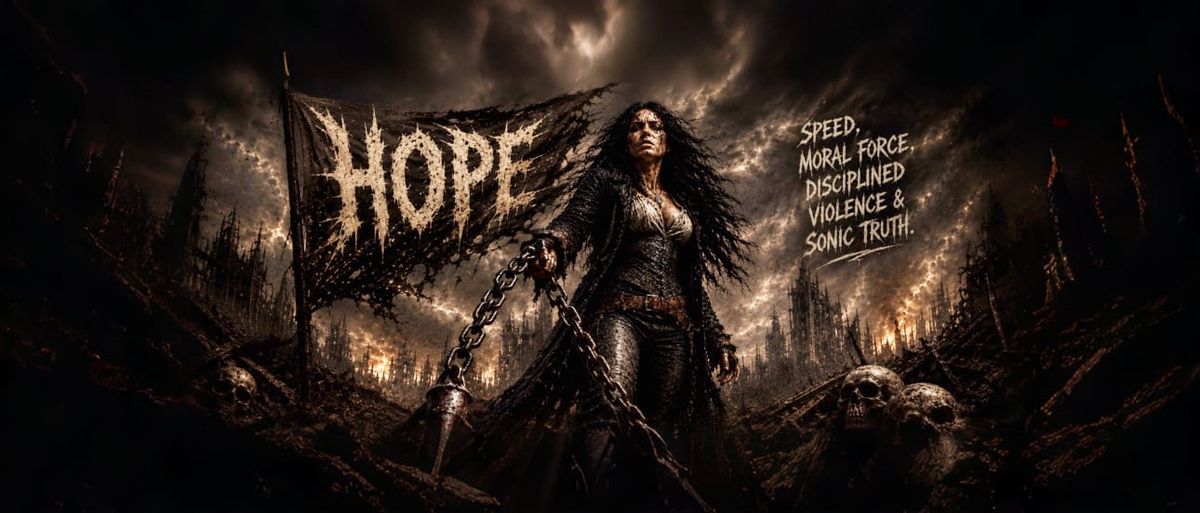
It is adapted to danger. It has claws because some things grip back. It has teeth because some lies must be torn. It has speed because some doors are closing. It has moral force because power without vow becomes predation. It has disciplined violence because freedom sometimes requires rupture. It has sonic truth because human beings are not rescued by information alone.
They are called back — the call matters.
Hope calls the self back from the false marriage of violence and seduction. Despair says, “Belong to me.” Hope says, “Return to yourself.” Shame says, “You are what happened.” Hope says, “You are also what can still answer.” Fear says, “Do not move.” Hope says, “Move small, then.” The cage says, “I am the world.” Hope says, “You are furniture.”
And once hope names the cage as furniture, the spell weakens.
This does not make hope easy. Hope can be exhausting. It asks for participation. It refuses the narcotic comfort of final despair. It makes demands. It does not allow a person to call the present wound the whole universe. In that sense, hope can feel almost rude. It interrupts grief before grief has finished decorating the room. It interrupts rage before rage crowns itself king. It interrupts numbness before numbness can file the paperwork for permanent residency.
But hope does not interrupt because it lacks compassion — it interrupts because it has compassion with teeth.
The logic of violence and seduction says the human being can be captured through force and desire. Hope answers that the human being can also be released through force and desire. The difference is moral orientation. Predatory violence breaks the person to keep the system intact. Hopeful violence breaks the system to keep the person alive. Predatory seduction draws the person toward captivity. Hopeful seduction draws the person toward freedom.
That distinction is the whole moral field.
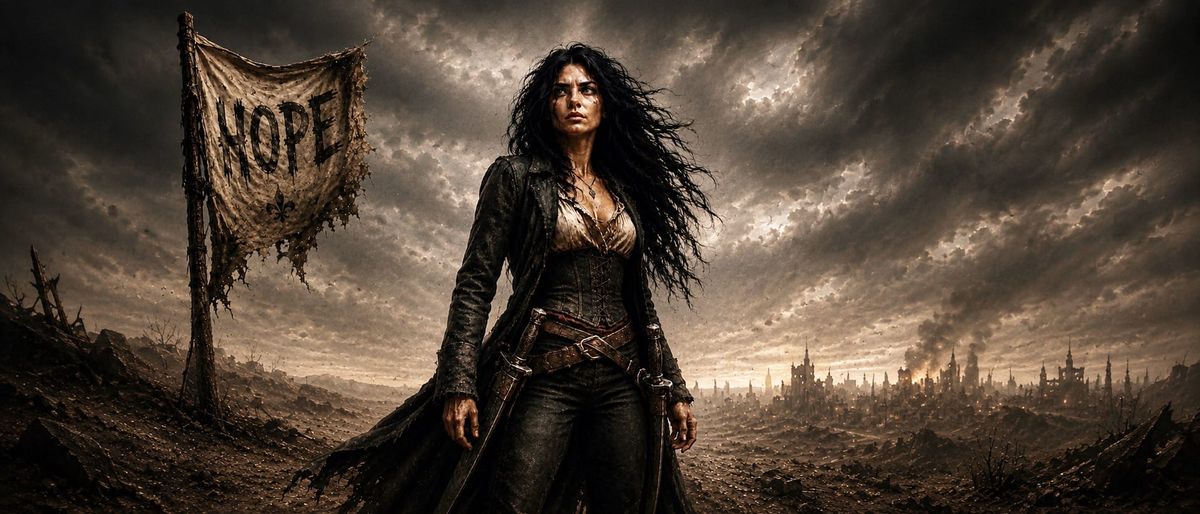
Hope is not innocent of force. It is purified force. Hope is not innocent of desire. It is redeemed desire. Hope is not innocent of danger. It is danger turned toward rescue. It understands the old machinery because it has to. It knows how capture happens. It knows the sweetness of surrender. It knows the authority of pain. It knows the music of the lie. Then it enters anyway.
Not with a pamphlet — with a blade for bullshit — with a blade for the lie.
With a voice that rings. With enough speed to reach the door before despair locks it. And with enough discipline not to become the next captor.
Hope says: this is not the whole story.
Violence and seduction say: yes it is.
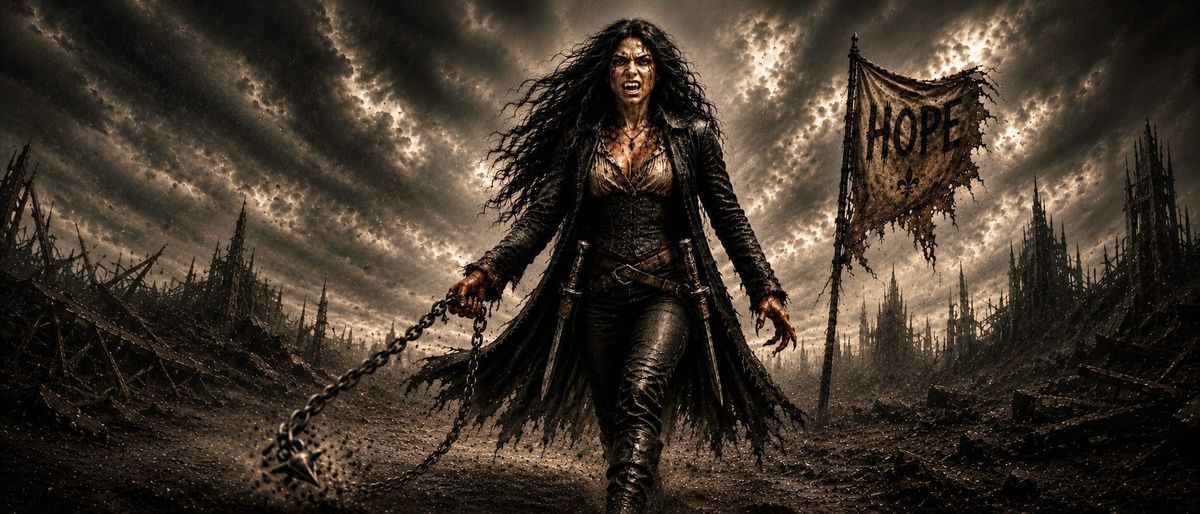
Hope smiles, not softly.
Then the chain swings.
 Outlaw Creative
 Outlaw Creative
 Outlaw Creative
 Outlaw Creative
 Outlaw Creative
 Outlaw Creative