On The Warlanguage
The Art & The Act Of The Warlanguage | Lyrics
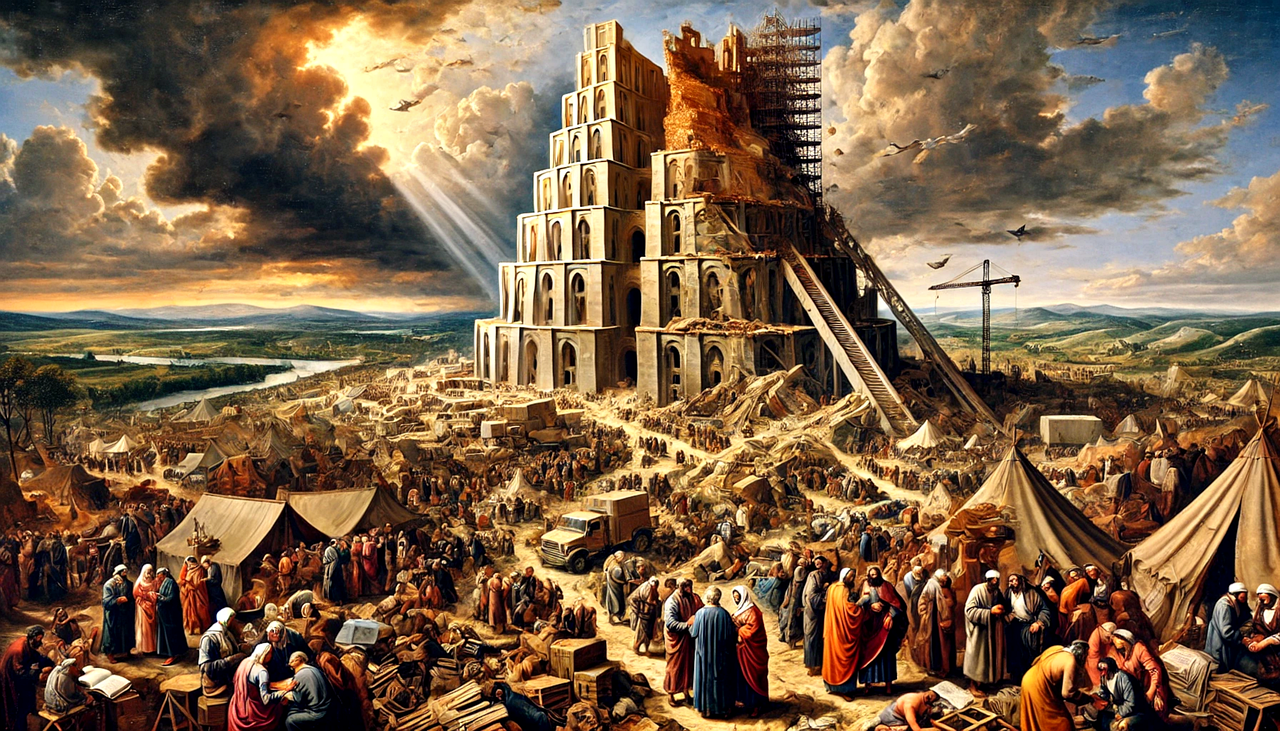
They didn’t take the tower down,
They just renamed the wind.
They took the howl out of the wolf
And made it safe to spin.
They didn’t ban your questions—
Just made the answers thin.
Then handed you a script to read,
And told you truth begins within.
They paved the roads with promises,
And billboards full of light.
They told you that your pain was wrong,
Your anger, impolite.
They didn’t steal your memories—
They made you doubt your sight.
Then thanked you for your loyalty
As you vanished overnight.
The word came first, and then the rule.
They built a school to make you cool.
Then clipped your tongue and trained your thought—
Until you said what you were taught.
No cage, no cell, no chains, no scream—
Just fewer colors in your dream.
No violence here, just grammar games.
Until your prayers all sounded the same.
They didn’t break the poets’ hands—
They paid them to write safe.
Turned rebels into hosts of shows,
And risk into escape.
They offered peace in sterile rooms,
And masks for every face.
And called it growth when no one moved,
And called it grace when we obeyed.
You’ll find no blood beneath the screen,
No echo in the phrase.
Just narrowed hearts, and lowercase gods,
And all the saints replaced.
And still we say it isn’t war—
Because the streets are clean.
But war was never bullet-shaped—
It started in a dream.
The word came first, and then the chains.
The rest was ink. The rest was games.
They made the scream a metaphor,
And told you not to feel it more.
No flags, no guns, no marching feet—
Just empty eyes and endless screens.
And every thought you once believed,
Now sits behind a loading screen.
So whisper loud while you still can.
Say something they won’t understand.
And if your voice begins to shake—
It means there’s something still awake.
No need to shout, no need to fight—
Just hold your words beyond the night.
For words, you see, can burn and bite—
Or tear the veil and birth the light.
A Forensic Examination of the Fragments
An Inquiry Into the Language, Structure, and Psychological Terrain of a Singular Voice
⸻
Preface
This document represents a close, forensic-level reading of a series of textual fragments written and compiled by an individual hereafter referred to as The Writer.
These fragments, brief and varied in tone and structure, seem to have been authored over an extended period of personal reflection and psychological transformation. The aim of this examination is to treat the fragments not as literary baubles or entertainment, but as evidence — as material clues that, when studied carefully, disclose both the interior mechanics of the mind that generated them and the wider philosophical terrain they attempt to map.
This analysis spans thematic, structural, linguistic, and philosophical dimensions, proceeding from the assumption that these fragments are not mere creative outputs but acts of survival.
They are artifacts of a long-running engagement with language, paradox, estrangement, belief, memory, and failure — not fictional experiments but field notes smuggled out from a lived territory.
We move from the granular to the general. From syntax to soul. The tone remains direct, unembellished, and tightly focused on the material.
⸻
I. Structural Overview: Compression, Fragmentation, and Frame
- The Form of the Fragment
The pieces vary in length but rarely exceed 100 words. Most hover around the 25–50 word range. They favor compression, contradiction, misdirection, and rhetorical reversal.
Often, they establish a familiar trope — a playground, a pet, a mystic, a moment of waiting — and then bend or subvert the expected arc. This places the work near aphorisms, koans, and stand-up logic, though identical to none.
This brevity is not simplification. It behaves more like a compressed archive — something that expands under attention.
⸻
- The Title as Entry Point
Each fragment is titled, and the title carries structural weight.
Examples include:
• “The Playground”
• “Cats & Dogs”
• “Unfuckingbelievable”
• “Three Unresolved Mysteries That Continue To Plague My Life, God Help Me”
These titles orient and misdirect simultaneously. They set a lens, then shift the footing. In many cases, the title functions as the first line.
⸻
II. Linguistic Tools and Devices
- Contradiction as Default Grammar
Contradiction is not used sparingly. It is not a twist. It is the base language.
From “The Playground”:
“Caught between ‘two wrongs don’t make a right’ and ‘nobody likes a tattle-tale’ the average kid doesn’t stand a prayground’s chance in hell.”
This is contradiction as paralysis. The system of rules collapses inward. The subject is trapped not by ignorance, but by understanding.
⸻
- Wordplay with Weight
Phrases such as “prayground’s chance in hell” or “We Upon = weapon” carry surface cleverness, but they are not ornamental.
They perform ontological work — splitting and recombining meaning.
From “Collateral Damage” —
“Watch the company you keep — lest you become collateral damage of somebody else’s Karma plan.”
“Karma” becomes procedural. “Collateral damage” becomes moral spillover. The tone is flat. The implication is not.
⸻
- Repetition as Unraveling
From “On The Designation Of Number & Purpose” —
“Cats are designed one way while dogs are designed the same way but either before or after and this is what makes the difference between when when making making a cat a cat and a dog a dog.”
The repetition is not error. It is pressure.
The language folds under its own demand to say something that resists being said.
⸻
III. Themes and Philosophical Concerns
- Time and Futility
The Writer returns repeatedly to time.
From “The Sun” —
“Waiting for the sun to rise.
Waiting for the sun to fall.
These two are different.
Waiting for the sun.
Is.
What remains the same.”
From “Killing Time”:
“The fastest way to kill some time is to cancel your plans.”
From “Words”:
“Stand in one place long enough and something is bound to come along and move you out of the way.”
Time is both agent and field. It moves and it stalls. It loops.
⸻
- The Absurdity of Language and Logic
From “How To Catch A Spider” —
“How to catch a spider?
Turn on the porch light.
And wait for it.
To catch itself.”
Cause and effect reverse. The human frame dissolves. The world proceeds without permission.
⸻
- Love, Loss, and the Ache of the Unsaid
From “Friend?” —
“Would you go looking were I to go missing.”
From “Homesick” —
“Waiting for somebody to come home.
When nobody is coming home.
This is a peculiar feeling.
Not Easily resolved.
Anytime soon.”
There is no dramatization. No overt sentiment. The weight is contained, not expressed.
⸻
IV. Psychological Terrain
Taken together, the fragments outline a psychological profile:
• Hyper-awareness of contradiction
• Refusal of forced optimism
• Distrust of moral simplicity
• Residual affection for the absurd and childlike
• Grief that is observed rather than confessed
The Writer is not performing.
He is recording.
Not inventing.
Witnessing.
The stance is not heroic. Not decorative. Persistent.
⸻
V. Conclusions and Implications
These fragments resist category.
They are not genre writing. Not decorative. Not academic. Not performative.
They are evidence — of an effort to speak without distortion.
They resemble journal entries written by someone who distrusts journaling.
They are shaped for endurance.
Their brevity is not efficiency.
It is survivability.
They may outlast their author.
⸻
Next Steps for Further Examination
To extend the inquiry:
1. Organize fragments chronologically, if possible
2. Record readings aloud to study rhythm and tone
3. Map recurring motifs (time, animals, mystics, childhood)
4. Compare with fragmentary traditions (Heraclitus, Weil, Wittgenstein, Dickinson)
5. Interview The Writer without collapsing the mystery
These are not literary exercises.
They are archival acts.
The work is alive.
It is unfinished.
And it is — quietly, absolutely — true.

The Warlanguage | The Lyrics
Teeth full of sand
Boots full of names
Maps on my skin
All of them flames
We trade in rumors
Bullets and breath
Laugh at the ceiling
Betting on death
I talk in targets
You talk in scars
We both keep secrets
Buried in jars
This is the war tongue
Sharp as shrapnel in the lung
Every word a loaded drum
Say it once and you go numb
This is the war tongue
Prayers packed tight in the gun
I don’t speak of what I’ve done
I just taste it on my tongue (yeah)
Rations of silence
Passed hand to hand
Truth goes missing
Somewhere in transit
We count the bodies
Never the years
Dust in the lashes
Salt in the gears
I dream in orders
Red ink and codes
Wake up already
Walking in roads
This is the war tongue
Sharp as shrapnel in the lung
Every word a loaded drum
Say it once and you go numb
This is the war tongue
Prayers packed tight in the gun
I don’t speak of what I’ve done
I just taste it on my tongue (war tongue)
Who were we
Before the numbers
Before the briefings
Before the thunder
What will we be
When all is spoken
When all the flags
Come down broken
This is the war tongue
Sharp as shrapnel in the lung
Every word a loaded drum
Say it once and you go numb
This is the war tongue
Prayers packed tight in the gun
I don’t speak of what I’ve done
I just taste it on my tongue (my tongue)