The Devil, Himself
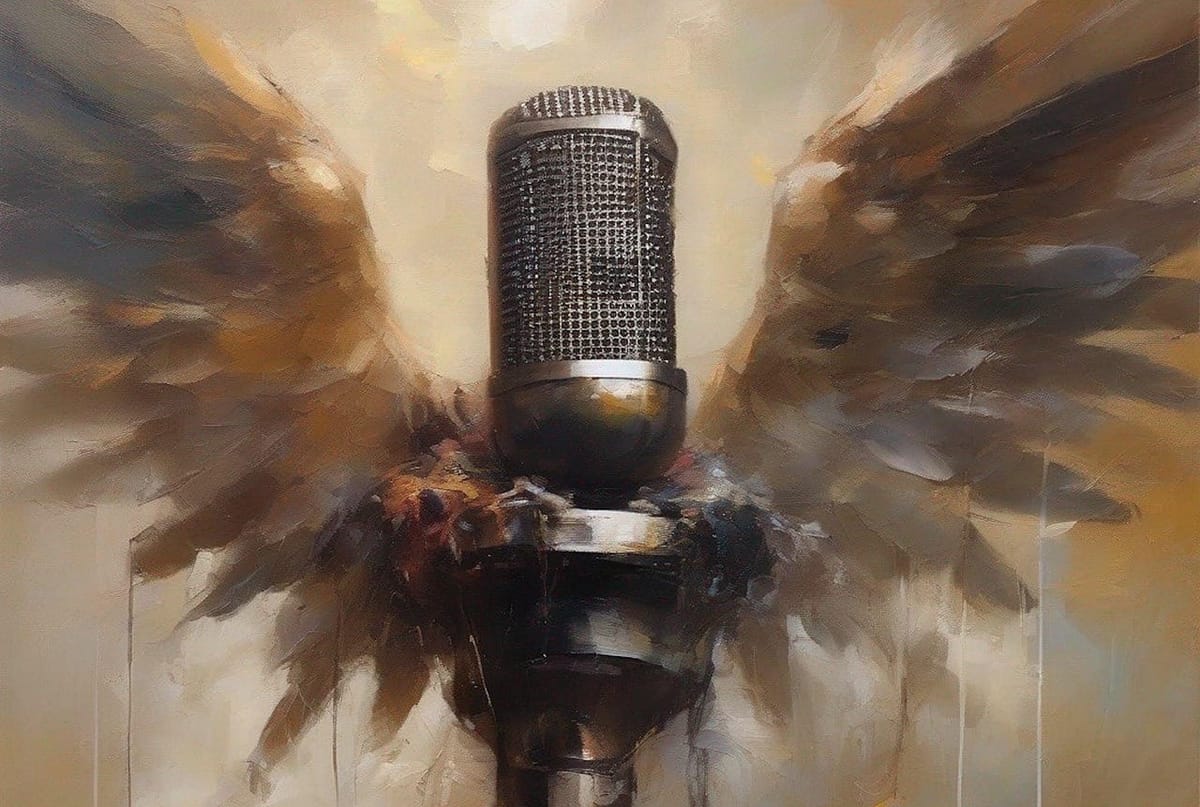
"The Devil, Himself"
I'm always in it for the money.
I'll run anything for the money.
What else are you gonna do?
When it runs out?
Besides nothing?
But plenty of time?
What else are you gonna do?
Besides nothing?
When it runs out?
Write a blues tune.
About a woman.
To the Devil, Himself.
When a man says he's in it for the money, don't be too quick to picture green bills. That's how small minds hear it. That's how bureaucrats and backroom men think. But a wiser ear hears the tone behind the term. Because money, real money, is never just currency. It's what you give your life for. It's what moves things in the world.
It's the substance of your deal. So let us begin where it always begins, with the bargain. I, I'm always in it for the money. That's not greed. That's not admission of guilt. That's orientation. It's a compass.
It's a signature. It says, I move where value is, where heat is, where there's something to be gained in the losing. But value is not always legal. And gain is not always measurable. Sometimes the money is attention. Sometimes it's power. Sometimes it's the thrill of being needed, of being the one they call when nothing else works.
And sometimes, yes, it's dollars. But even then, not because the bills matter, but because they carry the proof of movement. Because in this world, something is always being traded. And the one who says, I'm in it for the money, is the one who knows he's trading something and chooses not to lie about it. Two, I'll run anything for the money. That's not desperation. That's elasticity.
It's what happens when a person has learned to adapt, not because they're eager, but because the world doesn't pay out to purists. You can keep your principles. You can sit on your porch and believe the world owes you decency.
But eventually, you'll be cold. This line says, I got tired of waiting for good work to show up. So I made my own lane. And I'll run anything through it. Because even the cleanest hands don't stay clean if they're doing real work. This is not a soul for sale. This is a soul who knows.
Sometimes the cleanest outcome comes from a dirty process. And if the price is right, whatever price means that day, he'll run the line.
See, at 30s, what else are you going to do when it runs out? Now the question enters, not a rhetorical one, not posturing, a real question, the kind that rings out in the dark when the engine's quiet, and there's nobody left to blame. What do you do when the thing you were trading for, whatever money was, runs out? When the woman doesn't call? When the crowd stops clapping? When the paycheck bounces, or the deal goes silent? When the power doesn't make you feel strong anymore?
When the man in the mirror starts asking questions you can't answer? What else are you going to do? That's not cynicism. That's the marrow of the blues. Fee, besides nothing, but plenty of time.
Now we feel the cold part. When the transaction ends, and nothing's coming in, you're not empty. You're full, full of time. And time, when unstructured by meaning, isn't neutral. It's corrosive. Too much time, and no deal to make? That's a bad neighborhood.
Idle time is where memory sharpens, where guilt starts humming in the walls. That's when the old ghosts return. The face you disappointed.
The kid who looked up to you. The one good friend you let down for a fast score. Plenty of time is not a gift, it's a test.
V. What else are you going to do? Besides nothing? When it runs out? The repetition here is the soul trying to get traction. Say the line once, it feels like truth. Say it again, and it becomes a kind of ritual, a man trying to climb back into a structure of belief.
Trying to convince himself he still understands the rules, but deep down he knows. The rules changed. The market shifted, and I'm still playing the old game with yesterday's chips. What else are you going to do? That's the refrain of the working philosopher, not the armchair kind, but the man who lost things to understand them.
VI. Write a blues tune about a woman. Now, finally, he turns. Not toward solution, but toward expression. You can't beat time. You can't unrun the lines you've already run, but you can sing. You can put breath to the shape of loss.
You can form music from the collapse, and of course the tunes about a woman, because no matter what you were chasing, money, power, glory, it was probably her face in the chase, whether you knew it or not. The one who made you soft. The one who left first. The one you kept walking away from but couldn't unwrite. She becomes the subject not because she's to blame, but because she's the thread that ties it all back to the beginning. Back to when the deal was clean. Back to when money didn't mean manipulation, it meant possibility.
So you write a blues tune, not because she'll hear it, but because the act of singing is the only kind of honesty that doesn't require permission. Seven. To the devil himself. This is the closing move. The blues tune isn't addressed to the woman. It isn't addressed to God, not to yourself. It's to the devil himself.
Why? Because the devil was in the room when the first deal was made, not in the room with fire and pitchforks. No, in the boardroom, in the contract, in the split-second decision to say yes to something you should've let pass. The devil is the keeper of ledgers, and the blues tune is the one thing he can't collect. Because music isn't payment, it's testimony. So the song goes to the devil because it's the last thing he didn't ask for. And if you sing it right, you might just remind him that you were more than what you sold.
Eight. What? This really is. This fragment isn't a cry for pity. It isn't a coat of honor. It isn't even a warning. It's a receipt.
The writer knows what he ran. He knows what he earned. He knows what he lost. And he names it, not because it'll change anything, but because the only thing more terrifying than ruin is pretending it didn't happen.
Nine. For the listener. So what should you take from this? Understand the currency you're trading in, not what the world calls money, what you call it, what you're willing to lose sleep over, what you'd run for, what you'd burn for. Because whether it's applause, influence, survival, revenge, sex, safety, control, whatever it is, that's your money. And when it runs out, you'd better know what else you're willing to do. Because plenty of people have stood where this voice stands.
No income, no fuel, no deals left. And what they wrote next, that was their song. So make sure yours is worth listening to, even if you're singing it to the devil himself.