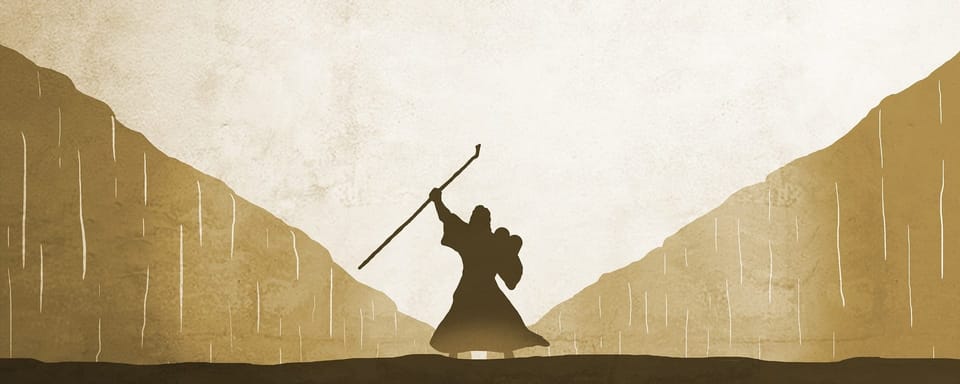
On Betrayal
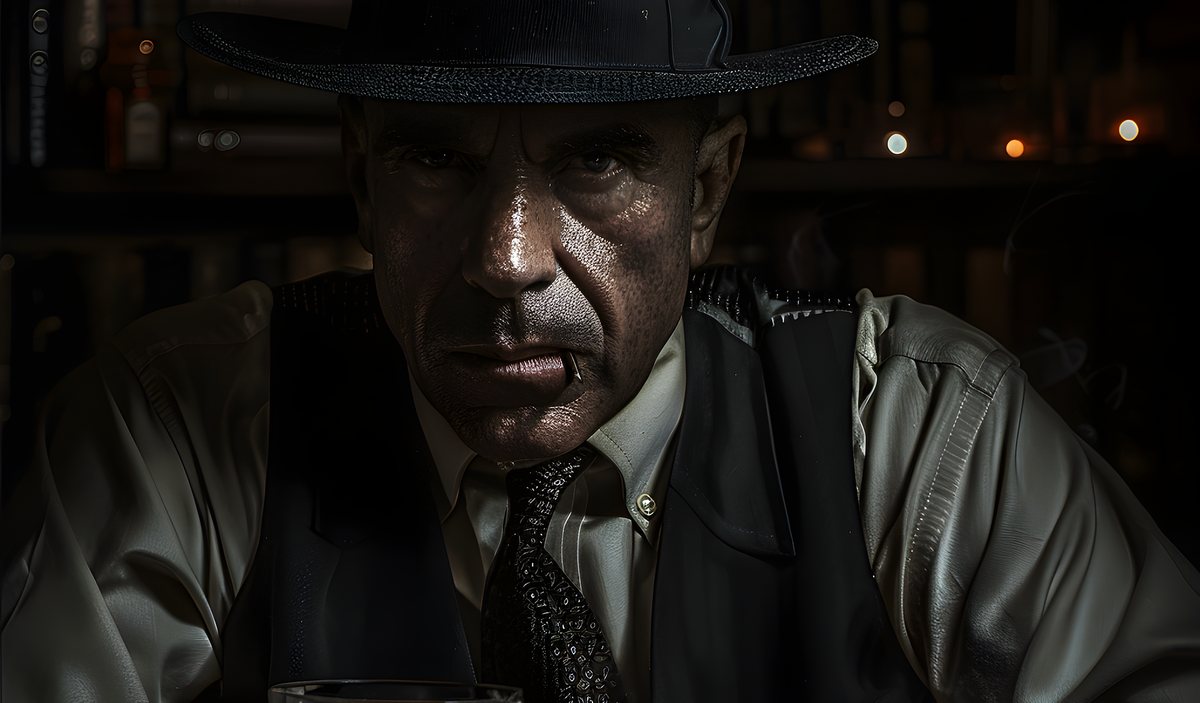

On The Weight Of Betrayal | Lyrics
He was welcome in my house.
He drank from the cup,
He spoke the words.
And I—
I believed.
But the mouth that spoke
Did not guard the hands.
The gate was opened from within.
O heart, how quietly the knife is placed
When placed by hands you do not doubt.
O trust, how soft the fall from grace,
When grace is what you built the house around.
It is not the stranger who wounds deepest—
But the one who knew where your softness slept.
I did not strike back.
I did not raise the name.
But I gathered the pieces.
Each one knew the shape of what was lost.
There is no retribution clean enough.
No flame to cauterize the soul.
So I let the ruin settle—
Not to sanctify the act,
But to protect what still remains whole.
I do not forgive to free him.
I forgive to walk forward unbound.
⸻
Was I naïve?
Perhaps.
But I would rather be cut for trusting
Than become a blade myself.
⸻
Let him go to dust or glory.
Let his name fall from my tongue.
What he took, he cannot keep.
What I carry, I carry long.
This is not the peace of forgetting—
It is the peace of not chasing.
⸻
The wound does not define the light.
The lie does not erase the vow.
What broke in me still beats in time—
And I remain unbent, somehow.
O teach me not to hate the hand
That once I trusted as my own.
Let judgment fall where it must fall—
But let me not turn into stone.
Amen.

- The Shape of the Word.
Betrayal is one of those words that does not require definition. It arrives heavy, dragging its shadow behind it. You feel it in your stomach before you can spell it. The syllables are blunt. Be–tray–al. It is a breaking word, an unraveling word, a word that carries inside it both the act and the wound. Unlike disappointment, which can be shrugged off, or anger, which may cool, betrayal sticks like a knife that does not wish to be removed. It names an experience of rupture, where what was supposed to hold does not hold, where the promise collapses under its own falseness.
We know betrayal not in theory but in lived aftermath: the silence that follows the excuse, the friend who does not show up, the lover who whispers to another what was promised only to us, the institution that claims justice while it delivers cruelty. The word needs no introduction. It has already entered each of our biographies, at least once, and usually more than once.
- The Core of Trust.
To understand betrayal, we must first understand trust. Trust is invisible, but it binds more surely than rope. We live by it without naming it: we trust that the floor will hold our weight, that the doctor will prescribe medicine with our good in mind, that the friend who says “I will come tomorrow” will indeed arrive.
Trust is always risk. It is never certainty. To trust is to place oneself into the hands of another, whether a person, a community, or even life itself. We lean into a space where we cannot see the outcome. It is precisely this leap that makes betrayal possible. For if trust were nothing but certainty, betrayal would be impossible. Betrayal presupposes that there was something given—an openness, a vulnerability—that is then turned against us.
Thus, the deeper the trust, the sharper the betrayal. A stranger can insult me, deceive me, ignore me, but they cannot betray me. Only those who have been allowed near the inner circle, those to whom I have given some part of myself, can wound me in this peculiar way.
- The Anatomy of the Wound.
What makes betrayal unique is that it cuts along two lines at once. First, there is the failure of action: the friend does not appear, the promise is not kept, the secret is told. Second, there is the collapse of meaning: the whole story we told ourselves about this person, this relationship, is suddenly rendered false.
The wound is not only that something was done against us. It is that the world in which we thought we were standing turns out to be made of sand. This is why betrayal often feels dizzying. We are not simply hurt; we are disoriented.
One can almost map the experience:
A shock, a dawning recognition: It cannot be.
A second stage: rage, the desire to strike back.
Then the hollowing stage: the realization that the past itself has been poisoned.
For betrayal has a retroactive force. It does not only damage the present moment. It rewrites the past, declaring: What you thought you lived was never real.
This is a cruelty unlike others. With most pain, at least the past can remain intact. But betrayal walks backwards through memory, scrawling graffiti on what once seemed pure.
- Small Betrayals, Great Betrayals.
We must distinguish scales. There are small betrayals—the forgotten promise, the half-truth told to spare embarrassment—that sting but do not fracture the foundation. Then there are great betrayals—the Judas kiss, the treachery that delivers one into captivity or ruin.
And yet, the line is not always clear. For to the person in pain, the “small” betrayal can be experienced as great. When the sick body waits in the hospital bed for the friend who said they would come, and they do not, the absence cuts deeper than it seems it should. This is because the situation amplifies vulnerability. What might have been tolerable on a casual afternoon becomes intolerable when one is already weak, already exposed.
Thus, betrayal is not measured merely by the act, but by the state of the betrayed. The same word can name both the monumental treason of a state and the personal cruelty of a friend’s casual negligence. In each case, the essence remains the same: the failure of trust, the reversal of what was promised.
- Betrayal and Apology.
There is a peculiar phrase attached to betrayal: Oh, sorry. These two words, often spoken with the thinnest breath of sincerity, attempt to paper over the abyss. But apology after betrayal rarely restores what was broken. Why?
Because betrayal is not merely about the act. It is about the collapse of meaning. An apology may acknowledge the act, but it cannot rewrite the fact that the betrayal occurred. Once you have been shown that the friend will abandon you, that the partner will lie, that the institution will sacrifice you for its own preservation, you cannot return to innocence. At best, you may reconstruct a new form of trust, but it will always be built on scar tissue, always marked by the memory of fracture.
This is why “sorry” often feels insulting after betrayal. It reduces the wound to a mistake, a misstep, when in truth something irreversible has occurred.
- Betrayal and the Body.
Betrayal is not only a concept. It lives in the body. The stomach clenches, the chest tightens, sleep disappears. The nervous system reads betrayal as danger, as if the one who betrayed us had pulled away the ground itself.
In hospitals, betrayal takes a cruel shape: the doctor promises relief, but the dosage remains unchanged; the nurse says “soon” and never returns; the body waits while words float above it like empty paper balloons. The body feels these as betrayals not only of trust but of survival. For the sick body depends upon the reliability of others. When that reliability fails, the body registers a primal terror: I may not be safe here.
Thus, betrayal and fear are intertwined. Betrayal does not only wound the heart; it destabilizes the sense of security in the world.
- Historical Betrayals.
On a grand scale, betrayal shapes history. Nations betray their ideals, leaders betray their people, revolutions betray their promises. The pages of history are drenched in broken oaths. The people are told: “We will liberate you.” Then chains are tightened. They are told: “We will feed you.” Then famine spreads.
And yet, betrayal at this scale is never merely political. It echoes the same pattern as the personal: trust extended, promise made, then reversed. The betrayed nation feels what the betrayed lover feels: rage, disorientation, loss of ground.
- The Betrayer.
Who betrays? Is it always malice? Sometimes yes. There are those who betray for gain, who calculate treachery for their own advancement. But often, betrayal is less deliberate. It is born of weakness, forgetfulness, fear. The friend falls back asleep, the ringer turned off. The promise to call becomes a silence.
And yet, for the betrayed, the reason rarely matters. The wound is the same. Indeed, sometimes the triviality of the reason makes the betrayal sting more. To be abandoned for some great cause might be easier to forgive. But to be abandoned because the other was tired, lazy, distracted—that is unbearable. It tells us: You were not worth even the smallest effort.
- Betrayal and Intimacy.
There is a paradox here. The possibility of betrayal is proportional to the depth of intimacy. The more someone matters to us, the more power they hold to wound us. To love is to risk betrayal. There is no way around this.
One might try to protect oneself by refusing intimacy, by keeping everyone at arm’s length. But such a life is impoverished. It avoids betrayal at the cost of avoiding love itself. Thus, betrayal is woven into the fabric of intimacy. To open the heart is to risk that it may be pierced.
The question, then, is not whether we can avoid betrayal, but how we live with its inevitability.
- After Betrayal.
What comes after? There are several paths:
Bitterness. The wound calcifies into hardness. The betrayed vows never again to trust. Life becomes a fortress, but a lonely one.
Forgiveness. Rare, difficult, sometimes miraculous. Forgiveness does not erase betrayal, but it allows the betrayed to live without carrying the wound like a weapon.
Wisdom. A middle path, where one learns the fragility of promises, the weakness of human beings, and yet continues to walk with open eyes.
Each path has its cost. Bitterness kills intimacy. Forgiveness demands the strength to let go. Wisdom requires holding contradiction: to trust again, knowing trust may be broken again.
- Betrayal of the Self.
There is another betrayal, quieter, more insidious: self-betrayal. When I promise myself I will change, and I do not. When I silence my own truth to please others. When I know what is right, yet choose what is easy.
This betrayal may be the deepest of all, for it cannot be blamed on another. It confronts me with my own duplicity. To live with self-betrayal is to live split, unable to stand fully in one’s own being.
And yet, perhaps self-betrayal is universal. We are fragile creatures, often failing our own ideals. The question is whether we acknowledge the betrayal and turn again toward integrity, or whether we bury it and let it rot inside us.
- The Strange Necessity of Betrayal.
Why must betrayal exist? Why is it part of the human story at all?
Perhaps because without betrayal, trust would be meaningless. To trust without risk is no trust at all. The fact that betrayal can occur is precisely what makes trust precious. To love someone, knowing they could betray you, is what gives love its intensity.
Thus, betrayal, though cruel, reveals the stakes of intimacy. It shows us the fragility of the bonds we rely upon, and therefore their value. A world where betrayal was impossible would be a world where nothing mattered, for nothing could be lost.
- The Eternal Return of Betrayal.
One never experiences betrayal only once. It recurs. Different faces, different settings, but the same knife. Each time, the old scars ache anew.
And yet, one also betrays others. None of us are innocent. We all fail, break promises, fall short. This realization complicates the story. To know oneself as both betrayed and betrayer is to know the depth of the human condition.
Perhaps this is why the theme is so persistent in religion, literature, myth. From Judas to Brutus, from Shakespearean treachery to modern politics, betrayal is the story that will not die. Because it is our story, repeated endlessly, in both directions.
- Toward a Philosophy of Betrayal.
What, then, can we say? Betrayal is not an accident at the margins of life. It is a structural possibility of all relation. Wherever there is trust, there can be betrayal. Wherever there is love, there can be treachery. Wherever there is promise, there can be failure.
Thus, betrayal belongs not only to the failures of humanity but to its greatness. For it is the shadow side of trust, love, and promise. To eliminate betrayal would be to eliminate the possibility of trust itself.
And so we walk forward, fragile, exposed, choosing again and again to trust, even knowing that betrayal lurks at the edges. This is the courage of being human.
- Closing Reflections.
Betrayal is the knife that teaches us about the depth of the heart. It wounds, it disorients, it scars. Yet it also reveals the intensity of what was trusted, the magnitude of what mattered.
We will be betrayed, and we will betray. This is inevitable. The question is what we do with the wound. Do we let it harden into bitterness, or do we allow it to teach us the weight of love, the fragility of promises, the preciousness of trust?
In this sense, betrayal is not only a cruelty but a teacher. It shows us that nothing can be taken for granted, that all trust is fragile, that every promise is a miracle because it might have been otherwise.
And so, despite betrayal, we go on. We continue to trust, to love, to promise. Not because betrayal is unreal, but because it is real—and because even with that knowledge, the human heart cannot help but extend itself again.

The Mathematics Of Betrayal
I knew the count was crooked
when the numbers started to grin,
when the ledger kept on shifting
to excuse the lesser sin.
You took a whole and split it
with a careful, practiced hand,
called the breakage “necessary,”
called the ruin “how we stand.”
Some debts don’t live on paper.
Some sums don’t come out clean.
Some knives are made of silence,
sharp as anything unseen.
This is the mathematics of betrayal,
equations adding up to less.
Fractions cutting through the body,
leaving nothing whole to bless.
You divided what was sacred,
multiplied the little lies,
and the answer kept on shrinking
right before my open eyes.
You can measure out a distance,
you can chart a falling star,
you can count the coins and footsteps,
you can name the wound from far.
But there ain’t no clean arithmetic
for the hour a promise breaks,
when a hand once called familiar
starts to feel like theft and ache.
You carried off the center,
left the edges there for show.
A house can still look standing
when the load-bearing’s let go.
This is the mathematics of betrayal,
equations adding up to less.
Fractions wounding all the living,
turning plenty into mess.
You divided what was given,
subtracted breath from trust,
and the answer kept collapsing
into ash and iron dust.
One for the lie.
Two for the split.
Three for the part of me
still standing in it.
Four for the proof
that never proved true.
Five for the hollow
you walked me through.
Zero in the pocket.
Zero in the chest.
Zero where the future
should have come to rest.
Take from the whole—
call it a share.
Break what was living—
say it was fair.
Piece by piece,
sign by sign,
wrong made patient
looks almost kind.
Count it slow.
Count it twice.
Betrayal always
hides in nice.
Now I see the old geometry
of angles turned away,
how the room got colder slowly,
how the daylight lost its say.
There are fractions that can heal you,
there are fractions used in care,
but the fraction born of treason
puts a crackline in the air.
This is the mathematics of betrayal,
equations adding up to less.
Fractions cutting through the spirit,
leaving wreckage in their dress.
You divided what was human,
multiplied the cost of loss,
and the answer kept on failing
like a name stripped from a cross.
So write it on the blackboard,
let the children learn it plain:
not every sum grows larger,
not every loss is gain.
Some numbers come back haunted.
Some balances are lies.
And every fraction wounds the whole
when betrayal does the dividing.