Looking For The Left Side Of Nothing When You Are Nowhere

Looking For The Left Side Of Nothing When You Are Nowhere
There are some phrases that do not explain themselves because explanation would ruin the mechanism. Looking for the left side of nothing when you are nowhere is one of those. It arrives like a joke, but it does not stay a joke. It makes the mind laugh first, then quietly removes the floor.
The phrase gives us a person trying to orient inside the absence of orientation. Not merely lost. Lost still assumes a map. Lost means there is somewhere to be and the body has drifted from it. But nowhere is worse than lost. Nowhere does not provide a wrong road. Nowhere provides no road at all. It removes the dignity of error. You cannot be mistaken in a place where direction has not yet agreed to exist.
And yet the person is still looking.
That is the human part.
Even in nowhere, the mind reaches for a side. Left. Right. Up. Down. Before. After. Cause. Effect. Meaning. Blame. Hope. Exit. We are creatures of orientation, and when the world refuses to give us coordinates, we begin manufacturing them from scraps. We hold up a hand and say, “This way.” But this way compared to what? The hand points. The world does not answer.
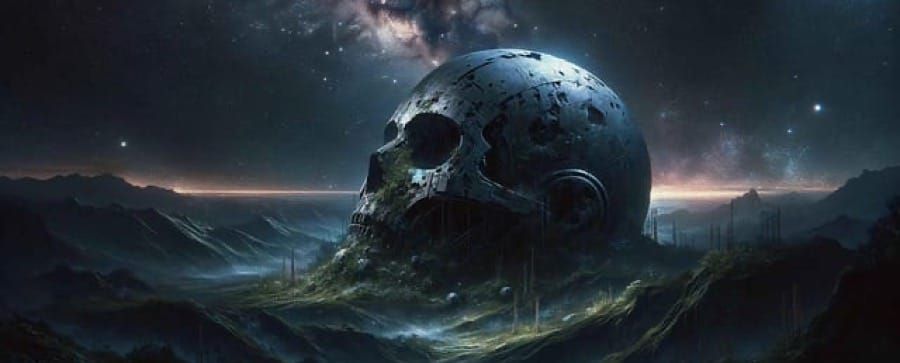
Nothing is not empty in the simple way. Nothing has pressure. Nothing has weather. Nothing is what remains when the usual objects are gone but the need for objects has not died. It is hunger without a table. It is a room after the furniture has been taken out, but the habits remain. You still walk around the missing chair. You still avoid the corner where the lamp used to be. You still expect the wall to tell you where the door is.
The left side of nothing is the mind’s last attempt to make absence behave like matter. If nothing has a left side, then nothing has shape. If nothing has shape, then perhaps it can be approached. If it can be approached, perhaps it can be crossed. And if it can be crossed, then maybe nowhere is not final. Maybe it is only a field before naming.
But the phrase refuses easy comfort. It does not say, “Looking for the road home.” It does not say, “Searching for meaning.” It says the left side of nothing, which means the search may be absurd from the beginning. It may be the wrong kind of task. The kind of task that keeps the mind busy while the soul waits for the real work to begin.
There are many ways a person ends up nowhere. Grief can do it. Illness can do it. Betrayal can do it. Institutional life can do it. Too much language can do it. Too much silence can do it. A person can wake up after years of doing what seemed necessary and discover that the path beneath them was not a path, only repetition with scenery. That is a special kind of nowhere: not emptiness, but accumulated motion without arrival.
Then comes the desperate geometry. Where is the left side? Where is the boundary? Where does this nothing begin and end? Where do I stand in relation to what has no relation to me?
That is when old wisdom says: stop moving.
Not forever. Not as surrender. But because in nowhere, motion can become panic wearing boots. The more frantic the search, the more convincing the illusion that there must be a hidden side, a secret door, a clever angle. But some places do not yield to cleverness. Some absences do not open because you found the right trick. Some nothings must be waited through.
Waiting is not inactivity. Waiting is how the body admits that speed has become useless. Waiting lets the false coordinates fall away. The first thing to die is the demand that nothing explain itself. The second thing to die is the shame of not knowing where you are. Only then can a more honest orientation begin.
Not left. Not right. Here.
Here is the first recovered direction.
Here does not solve the problem, but it stops the bleeding. Here means the body has returned to its own fact. Here means breath has found a room. Here means the ground, if there is ground, may be tested. Here means the mind no longer has to pretend it has already escaped.
The strange mercy is that nowhere sometimes becomes visible only after we stop trying to convert it into somewhere too quickly. The left side of nothing may not exist. But the act of looking reveals the looker. It shows what the person cannot stop needing: direction, measure, relation, a place to put the weight. That need is not foolish. It is human. Even the absurd search testifies to the living will to orient.
There is a kind of courage in that. Not heroic courage. Not banner courage. The smaller, older kind. The courage of the person who says, “I do not know where I am, and I cannot make a map out of the air, but I will not let the absence name me.”
Because that is the danger. Not that you find nothing. That happens. The danger is that nothing finds you and persuades you that it is your proper name.
It is not.
Nowhere is a condition. It is not an identity. Nothing is a field. It is not a verdict. The absence of visible direction does not mean direction has become impossible. It may mean the old instruments have failed. It may mean the compass was built for easier terrain. It may mean the language you inherited cannot describe the place where you are standing. It may mean the next true sentence has not yet arrived.
So you do the humble thing. You stay.
You place one word beside another. You test the line. You watch the blank. You let the phrase stand there without forcing it to become doctrine too soon. You ask whether nothing has a left side, and when no answer comes, you ask what kind of creature needs one. That question is better. That question has a pulse.
Maybe the left side of nothing is not a location. Maybe it is the first edge of awareness. The place where pure absence begins to cast a shadow because the witness has finally arrived. Nothing, once witnessed, is no longer total. Nowhere, once spoken, has at least one coordinate: the speaker standing inside it.
That does not make the place pleasant. It does not turn salt flats into gardens. It does not hand the wanderer a road and a canteen. But it changes the law slightly. It says: there is still someone here who can notice. There is still a hand able to point, even if the pointing fails. There is still a voice capable of naming the failure without becoming it.
And maybe that is enough to begin.
Looking for the left side of nothing when you are nowhere is hard. Some things are near impossible.
But near impossible is not impossible.
Near impossible is where the old ridiculous work begins: the work of making a mark in a blank so wide it seems to mock the hand. The work of standing in a place that refuses to become a place. The work of refusing to let absence have the final grammar.
Somewhere, eventually, a line appears. Not because nothing had a left side all along, but because the person looking became steady enough to draw one.
That is how nowhere first becomes a field.
Not by discovery. By witness.
Not by certainty.
By the hand making one honest mark and staying long enough to see whether it holds.