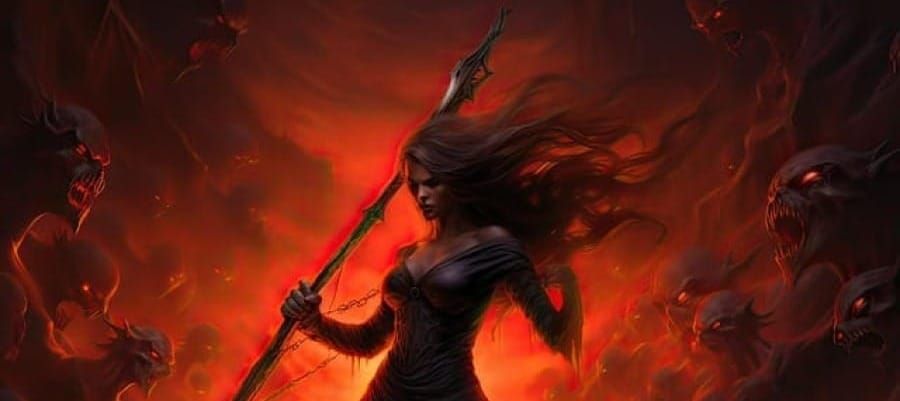
Lethe: The Dark Horse Of Forgetfulness Rides From The River
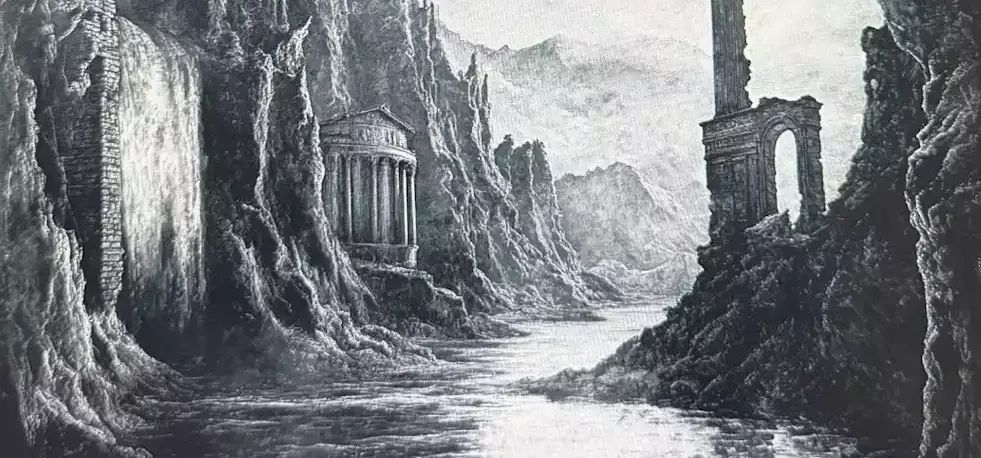
“Lethe: The Dark Horse Of Forgetfulness Rides From The River” | Lyrics
There’s a river runs beneath memory
Black water under the tongue
And every man drinks from it eventually
Whether willing… or young
I knew a man who could hold a room
With nothing but a pause and breath
Folks leaned in close like church bells swung
From somewhere beyond death
He could pull confession from factory hands
From women tired to the bone
Could make a drunk remember his children’s names
Could make a stranger feel less alone
But the Dark Horse waited downstream
Hooves buried deep in the fog
And every truth not carried carefully
Got swallowed by the bog
The Dark Horse of Forgetfulness rides from the river at night
Slow through the fields of the nameless
Beneath the dead moonlight
He don’t steal your facts or figures
Don’t take your house or your gold
He takes the warmth from the meaning
‘Til the living story goes cold
I watched good men lose whole years
Not to whiskey, not to war
But to a thousand tiny distractions
Leaking through the kitchen door
A buzzing phone
A television glow
A grievance polished clean
And somewhere beneath all that static
The soul forgot what it had seen
Forgot the vow made at midnight
Forgot the trembling in the chest
Forgot the moment God passed close enough
To disturb a man’s rest
The Dark Horse of Forgetfulness rides from the river at night
Crossing over the old roads
Where wrong once still felt right
He drinks from Lethe slowly
Then breathes into your ear
And suddenly the thing that saved you once
Feels very far from here
Remember your name
Remember your name
Not what they called you
Not what they bought from you
Not what they blamed you for
Remember the sound beneath the sound
The hand beneath the door
Remember the fire before language
Remember the pulse before speech
Remember the thing you almost touched
But never quite could reach
There are churches full of forgetting
And bars full of holy men
There are mothers who still remember songs
Their children lost back then
There are notebooks in Walmart bags
Sleeping high above the floor
Like little black boxes from crashed-out years
No one can carry anymore
And somewhere a horse keeps moving
Through weather no eye can chart
Taking whole civilizations apart
One distracted heart at a time
The Dark Horse of Forgetfulness rides from the river at night
And every soul must answer
Whether to drift — or fight
He circles slow around you
Patient as the tide
Waiting for you to surrender
The name you carry inside
But if you keep one coal still burning
If you guard one inward flame
Then even Lethe cannot wash away
The sound of your true name
Slow down
Know which way is up
Know what time it is
And when the Dark Horse comes riding
Remember your name.
Lethe: The Dark Horse Of Forgetfulness Rides From The River
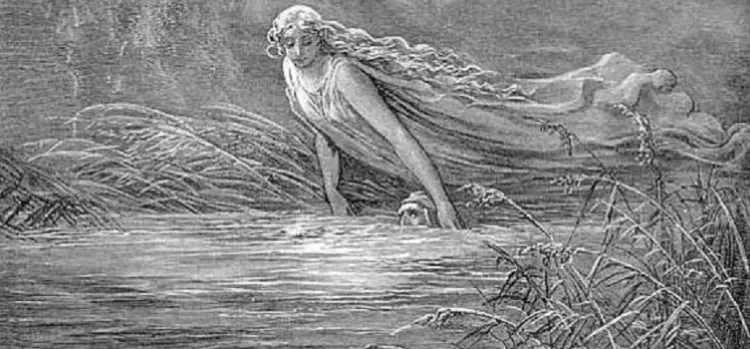
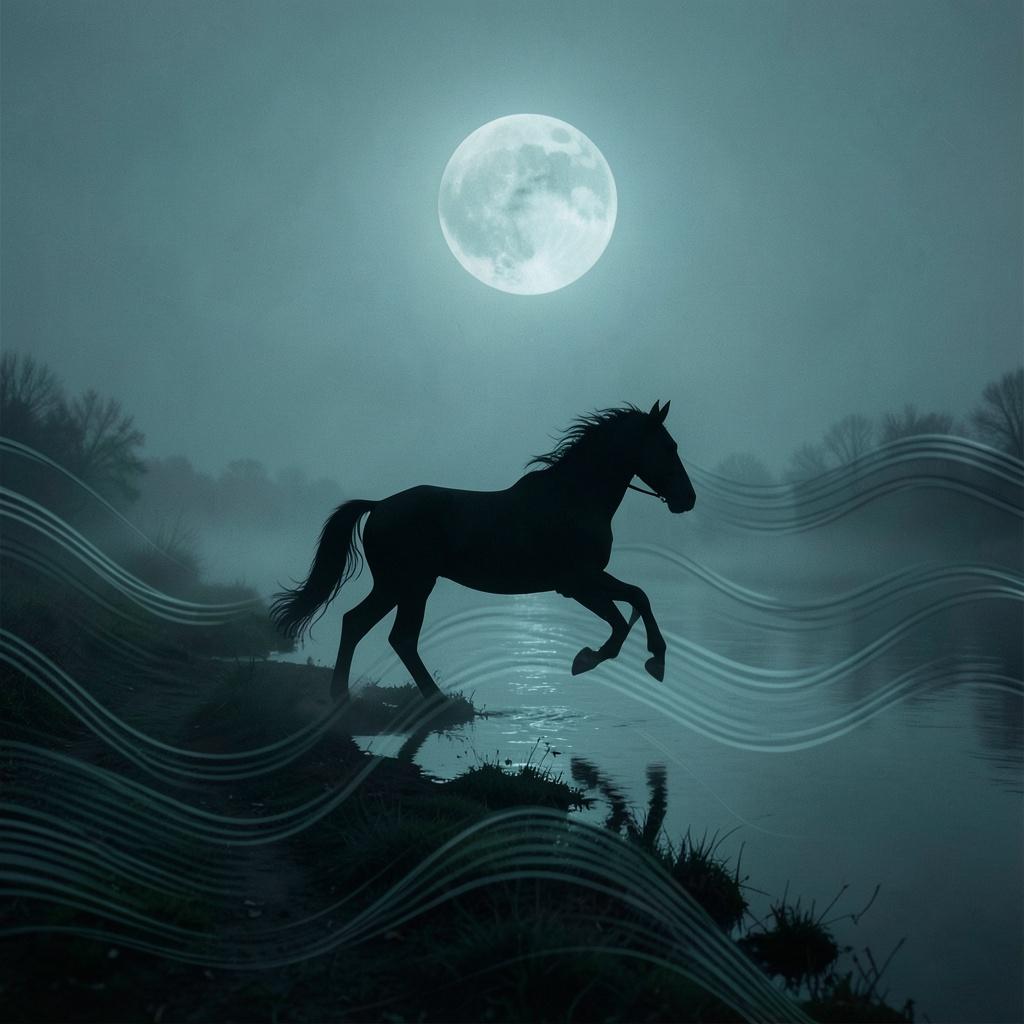
To live in the twenty-first century is to be besieged by the tyranny of the archive. We are caught in the suffocating web of an all-recording apparatus, a digital panopticon where every error is immortalized, every fleeting thought is indexed, and our personal histories are fossilized in the cold stratigraphy of databases. We have deified memory, elevating it as the supreme arbiter of identity, truth, and moral worth. Yet, in this relentless crusade for total recall, we have forgotten a more ancient, liberating truth: that life requires death, and memory requires oblivion.
"Lethe: The Dark Horse Of Forgetfulness Rides From The River." This sentence does not describe a passive tragedy or a cognitive defect. It is a declaration of war against the paralysis of absolute preservation. Lethe—the mythological river of the Greek underworld whose waters granted forgetfulness to the souls of the dead—is not a stagnant pool of erasure, but a dynamic, subterranean current. From its depths emerges a "dark horse," an unbidden, powerful, and wild force that gallops across the landscape of human consciousness. This dark horse of forgetfulness is not our enemy; it is our silent savior. It is the necessary, active force that clears the overgrown thickets of the mind, allowing new life to take root.
By exploring this aphorism through a rhizomatic lens—tracking its lateral expansions across mythology, neurobiology, digital technology, political philosophy, and creative aesthetics—we discover that forgetfulness is not the mere absence of memory. It is a creative triumph, an existential necessity, and a vital art form that we must urgently reclaim.
I. The Mythic Wellspring: Lethe and the Tragedy of Funes
To understand the ride of the dark horse, we must first trace the river from which it drinks. In the geography of the ancient Greek underworld, Lethe ran parallel to Mnemosyne, the river of memory. Initiates of the Orphic mysteries were warned to avoid the waters of Lethe and instead drink from Mnemosyne to retain their divine consciousness. For centuries, Western culture has inherited this hierarchy, viewing memory as the soul's ascent and forgetfulness as its descent into animalistic darkness.
But this hierarchy is a dangerous illusion. To understand the horror of absolute memory, we need only look to Jorge Luis Borges’ landmark story, Funes the Memorious. After a fall from a horse, Ireneo Funes acquires the curse of infallible perception and memory. He remembers the shape of the clouds at any given moment, the exact texture of a leaf on a tree three years prior, and the precise sequence of his own thoughts during a rainy afternoon in his childhood. Yet, Funes is paralyzed. He cannot think. "To think," Borges writes, "is to forget a difference, to generalize, to abstract." Funes’ mind is a chaotic garbage dump of infinite, useless details. He is a monument to the tyranny of Mnemosyne.
Without the waters of Lethe, we are all Funes. We are crushed under the accumulated detritus of our sensory experiences, our grudges, our griefs, and our failures. The dark horse of forgetfulness rides from the river not to rob us of our humanity, but to restore it. It is the force that trampling down the paralyzing specificities of our past so that we might synthesize, conceptualize, and dream. It is the dark horse that rescues us from the madness of total recall, transforming the chaotic noise of existence into the coherent melody of lived experience.
II. Synaptic Pruning: The Neurobiology of the Dark Horse
If the mythological river of Lethe feels remote, we need only look beneath our skulls to find its physical manifestation. The human brain is not a hard drive designed to accumulate data indefinitely; it is a highly selective sculptor. The dark horse of forgetfulness gallops through our neural pathways every single night while we sleep, carrying out the essential work of synaptic pruning.
In the early stages of development, and indeed throughout our daily lives, our brains form billions of synaptic connections. If we retained every connection, our neural architecture would suffer from catastrophic interference—a biological version of Funes’ paralysis. Enter the brain’s waste-clearance system: the glymphatic system and specialized cells called microglia. During deep sleep, these biological agents act as Lethe’s emissaries. They actively dismantle weak or redundant synapses, sweeping away the cognitive white noise of the day.
This is not a passive decay; it is an active, energy-intensive process. Neuroscientists have discovered that forgetting is mediated by specific signaling pathways and neurotransmitters, such as dopamine-mediated forgetting in the hippocampus. The brain must expend energy to forget. It must actively deploy its dark horse to run through the memory traces, erasing the trivial—what we ate for lunch three weeks ago, the license plate of the car in front of us—so that the essential can be consolidated.
Consider the tragedy of Post-Traumatic Stress Disorder (PTSD). PTSD is not a failure of memory, but a failure of forgetfulness. It is a condition where the traumatic event remains raw, vivid, and immediate, refusing to submit to the softening currents of Lethe. The dark horse has been locked in its stable, and the patient is left to relive their worst moments in high definition. In this context, therapeutic interventions like EMDR or beta-blocker therapies are not attempts to "fix" memory, but attempts to call forth the dark horse—to actively induce a state of emotional forgetfulness that allows the trauma to be integrated and filed away. We must realize that the ability to forget is the very engine of psychological resilience.
III. The Digital Panopticon: Reclaiming the Right to be Forgotten
While our brains naturally cultivate the art of forgetting, our technology does the exact opposite. We have constructed a digital civilization that is structurally incapable of forgetting. Every search query, every adolescent indiscretion, every political opinion expressed in a moment of youthful ignorance is etched into the silicon tablets of the cloud. We have built an artificial Mnemosyne, and it is suffocating us.
In this digital panopticon, we are denied the grace of the clean slate. The teenager who makes a foolish comment on social media is haunted by it a decade later when applying for a job. The citizen who served their time for a minor crime is forever branded by a Google search result. This hyper-mnesic culture has created a chilling effect on human behavior. When everything is recorded, nothing can be risked. We become cautious, conformist, and terrified of experimentation, because we know that the digital archive never forgives and never forgets.
It is here that the call to action must ring loudest: We must demand the repatriation of the dark horse of Lethe into our digital ecosystems.
This is not merely a technical challenge; it is a profound political and philosophical battle. The European Union’s implementation of the "Right to be Forgotten" (GDPR Article 17) is a crucial, yet early, skirmish in this war. It is an attempt to legally mandate the waters of Lethe, forcing search engines and corporations to erase outdated, irrelevant, or harmful personal data. But we must go further. We must design technologies that have decay built into their very architecture.
We need ephemeral platforms that do not warehouse our souls, but allow our conversations to dissolve into the ether like smoke. We must champion database designs that automatically delete logs, and social norms that treat the archiving of another person’s distant past as a form of social violence. We must let the dark horse run through the server farms, trampling the surveillance capitalism that monetizes our inability to escape our pasts. Only when we restore the possibility of forgetting can we restore the possibility of human growth, redemption, and reinvention.
IV. Political Amnesia and Aesthetic Amnesty: The Dual Edge of the Sword
To advocate for forgetfulness is to tread on dangerous political ground. We are rightfully warned that "those who cannot remember the past are condemned to repeat it." We build monuments, write textbooks, and establish museums to ensure that historical atrocities—genocides, wars, systemic oppressions—are never erased. How, then, can we champion Lethe in the political sphere?
The answer lies in the distinction between malicious erasure and creative amnesty.
Malicious erasure is the tool of the tyrant. It is the deliberate destruction of archives, the rewriting of history books, and the disappearance of dissidents. This is not Lethe; this is a violent, artificial blinding of the public consciousness.
Creative amnesty, however, is a profound political technology of peace-making. The word amnesty shares its etymological root with amnesia—both derive from the Greek amnestia, meaning forgetfulness or oblivion. Throughout history, societies that have emerged from devastating civil conflicts have understood that a future cannot be built on an endless cycle of recrimination and revenge.
Consider the transition of South Africa through the Truth and Reconciliation Commission, or the transition of Spain after Franco through the Pacto de Olvido (the Pact of Forgetting). While these processes are fraught with compromise and pain, they represent a conscious choice to let the dark horse of forgetfulness ride through the blood-soaked soil of national memory. To move forward, a nation must sometimes agree to stop picking at its scabs. It must choose to forget the blood-feuds of the grandfathers so that the grandchildren can sit at the same table.
This is a delicate, razor-thin balance. We must remember the lessons of history, but we must forget the grievances of history. If we do not, the past becomes a spectral army that colonizes the present, forcing us to fight ancestral wars over and over again. The dark horse must be ridden with exquisite skill: not to blind us to the truths of what happened, but to sever the chains of resentment that keep us bound to the corpses of our ancestors.
V. The Creative Void: Unlearning as the Genesis of Art
In the realm of creativity and aesthetics, the dark horse of Lethe is nothing less than the muse of the avant-garde. To create something genuinely new, an artist must first master the difficult art of unlearning. They must forget the rules, the traditions, and the overwhelming weight of those who came before them.
Harold Bloom famously wrote of the "anxiety of influence," describing the agonizing struggle of the poet to establish their own voice in the shadow of giants like Shakespeare or Milton. The only way to survive this anxiety is through a strategic, creative forgetfulness. The artist must drink from Lethe to temporarily blind themselves to the achievements of the past. They must approach the canvas, the page, or the instrument with a radical innocence—a state of productive ignorance.
Nietzsche, in his seminal essay On the Use and Abuse of History for Life, argued that an excess of historical consciousness is hostile to life and creativity. The "historical fever" of his age, he believed, turned men into walking encyclopedias, incapable of acting with spontaneous, youthful vigor. Nietzsche championed the "unhistorical" and "super-historical" standpoints—the ability to forget, to live in the moment, and to draw a horizon around oneself. "It is possible to live almost without memory," Nietzsche wrote, "indeed, to live happily, as the beast demonstrates; but it is completely impossible to live at all without forgetting."
The modern artist must welcome the dark horse. When we enter the studio, we must let the hooves of Lethe scatter our textbooks, our style guides, and our anxiety about how our work will be received or categorized. We must forget the market, forget the critics, and forget our own previous successes. The creative act is, at its core, a plunge into the dark waters of the river. It requires us to dissolve our established identities so that we can emerge from the water with wet, fresh eyes, ready to see the world as if for the very first time.
VI. The Rhizomatic Width of Forgetfulness
To view this aphorism through a rhizomatic lens is to understand that Lethe is not a single, linear highway leading to dementia or loss of self. Instead, it is a vast, underground root system that connects seemingly disparate domains of human existence. The dark horse does not run in a straight line; it gallops laterally, jumping from the biological to the technological, from the psychological to the political, from the mythic to the creative.
                   [THE WATER OF LETHE]
                            |
         +------------------+------------------+
         |                                     |
[BIOLOGICAL NODE]                     [TECHNOLOGICAL NODE]
 - Synaptic Pruning                    - Right to be Forgotten
 - Sleep & Glymphatic Clearance        - Ephemeral Data Design
 - PTSD & Trauma Resolution            - Anti-Archive Liberation
         |                                     |
         +------------------+------------------+
                            |
                    [POLITICAL NODE]
                     - Creative Amnesty
                     - Breaking Ancestral Feuds
                     - Releasing Resentment
                            |
         +------------------+------------------+
         |                                     |
 [CREATIVE NODE]                       [EXISTENTIAL NODE]
  - Unlearning & Radical Innocence     - Generalization & Abstraction
  - Destroying Influence Anxiety        - The Grace of the Clean Slate
  - Nietzsche's "Unhistorical" Life    - Forgiving the Self
When we trace these connections, we see that the crisis of modern life is a crisis of clogged channels. Because we have dammed up the river of Lethe, our biological systems are overloaded with stress and trauma; our digital environments are toxic with permanent records; our political spheres are paralyzed by historical grievances; and our creative lives are stifled by the weight of endless archives.
We have tried to build a world of pure light, pure memory, and pure transparency. But in doing so, we have forgotten that plants need the darkness of the soil to grow, that the eye needs the darkness of the eyelid to rest, and that the mind needs the darkness of Lethe to remain sane.
VII. A Manifesto for the Reclamation of Lethe
Let us, therefore, draft a manifesto for the reclamation of forgetfulness. We must cease to view forgetting as a shameful vulnerability, a symptom of aging, or a failure of intellect. We must elevate it to its rightful place as an active, courageous, and life-affirming practice.
1. Embrace the Art of Personal Oblivion
We must learn to actively forget our own histories. This does not mean denying our pasts or escaping responsibility, but rather refusing to let our past mistakes define our present potential. We must let the dark horse ride through the gallery of our self-recriminations, trampling down the old shames, the ancient embarrassments, and the narratives of victimhood that we carry like heavy armor. Forgiveness is nothing more than a form of conscious forgetfulness—an agreement to no longer hold a debt against ourselves or others. Drink deeply from the river of Lethe, and grant yourself the grace of the clean slate.
2. Cultivate Digital Ephemerality
We must rebel against the permanent digital record. We must actively choose platforms, habits, and technologies that do not leave a trail. Let us write emails that delete themselves after reading; let us have conversations that exist only in the air between us; let us resist the urge to photograph and archive every meal, every concert, and every sunset. By letting our moments die, we allow them to live fully in the present. We must demand and build a digital world where the right to be forgotten is not a bureaucratic loophole, but a fundamental human right.
3. Practice Radical Unlearning
In our intellectual and creative lives, we must commit to regular periods of de-education. We must seek out experiences that disorient us, that challenge our deeply held assumptions, and that force us to forget the patterns of thought we have spent years perfecting. We must read outside our disciplines, engage with ideas that confuse us, and embrace the profound humility of saying, "I do not know." The dark horse of forgetfulness is the plow that breaks up the compacted soil of our dogmas, making room for new seeds of understanding to grow.
4. Champion Historical Amnesty for the Future
In our political and social discourses, we must resist the temptation to weaponize the archive. We must reject the call to endlessly litigate past grievances in a way that prevents future cooperation. We must have the courage to offer amnesty—not as a betrayal of justice, but as a preservation of the future. We must recognize that if we demand a perfect reckoning for every historical wrong, we will be left with nothing but a scorched earth. The dark horse of Lethe must be welcomed onto our political battlefields to trample the ancient grudges and clear a space where peace can be negotiated.
Conclusion: The Gallop of the Dark Horse
The river of Lethe is not a place of death, but a place of rebirth. It flows not to drown us, but to wash away the dust of our long journeys. And from its dark, cool waters, the dark horse continues to rise.
See it now: its coat is the color of obsidian, its eyes are wide with wild freedom, and its hooves strike sparks of light from the rocky ground. It does not carry a rider who wishes to conquer or enslave us; it rides as a messenger of liberation. It gallops through the crowded archives of our minds, through the bloated databases of our cities, through the blood-stained battlefields of our histories, and through the cluttered studios of our arts. Wherever it runs, the heavy, suffocating air of the past is stirred by a fresh, cool wind.
Do not fear the dark horse of forgetfulness. Do not try to leash it, to stable it, or to shoot it down with the arrows of your anxiety.
Open the gates. Let the river flow. Let the dark horse run. For only when we have the courage to let go of what was, do we find the strength to discover what can be. Let the dark horse of forgetfulness ride from the river, and in its wild, untamed wake, let us finally learn how to live.
 Outlaw Creative
 Outlaw Creative