Collateral Damage
One: Collateral damage. A study in uninvited suffering.
There is a kind of suffering that does not belong to you, yet it enters your life anyway. It does not knock. It does not ask your name. It comes because someone near you opened a door long ago, and never closed it.
You are not the one who lied. You are not the one who left. You are not the one who broke faith, or played games with truth. But now you live with the consequences. Not because you earned them, but because you were close. This is what the sentence speaks of. Watch the company you keep, lest you become collateral damage of somebody else's karma plan.
It is not dramatic. It is not poetic. It is simply real. Aye, there are forces already in motion. Long before you met them, someone made choices. Long before they stood beside you, they set events into motion. And long before they loved you, they made promises to others that they did not keep. None of that was yours.
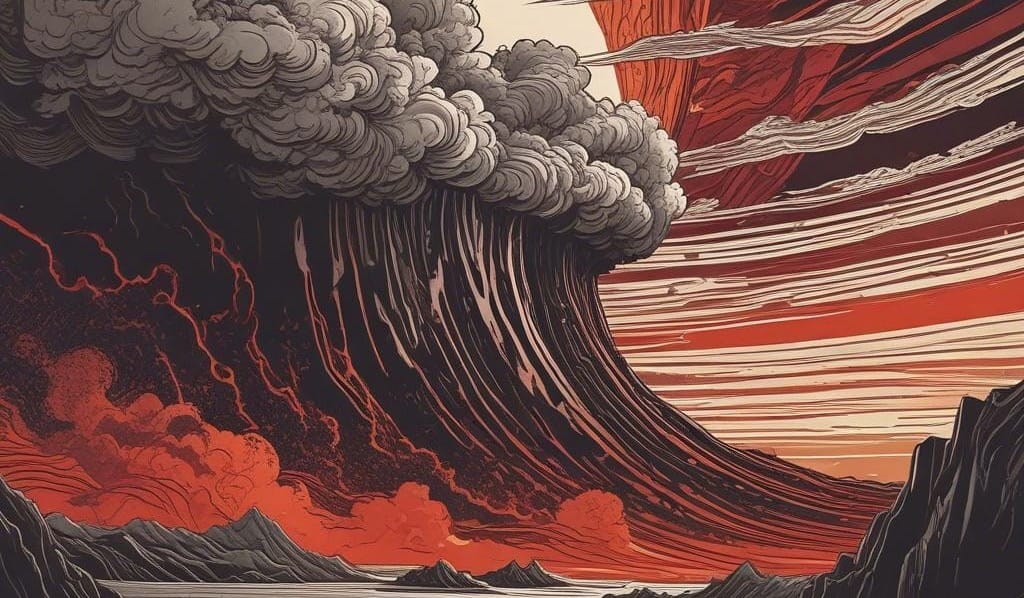
But their life did not pause just because you arrived. Whatever had been building, kept building. Whatever remained unfinished, kept moving forward. And when the wave finally reached the shore, you were the one standing there. This is how lives intertwine without agreement. This is how karma unfolds without fairness.
Two: Innocence is no protection.
You can be kind. You can be loyal. You can have done nothing but offer your hands and your heart. But when a pattern reaches the point of collapse, it does not ask who deserves the wreckage. It simply collapses.
And you, the one who stood nearby, catch the falling pieces. This is not about blame. It is about weight. Even if you didn't build the structure, if it falls while you're inside, you still get crushed.
Three: The Shape of Karma.
People think karma is justice, that it is some kind of divine arithmetic. What you give, you get.
But that is a story we tell ourselves to feel safe. In truth, karma is a tide. It is cause and effect stretched across time. And it is often delayed. The choices people make, especially the ones they deny or hide, begin to collect weight. That weight must go somewhere. And often, it does not return to them in tidy packages.
It lands sideways. It lands where the structure is weakest. It lands on the one who isn't looking.
And that may be you.
To be near someone is to share a portion of what they carry, even if they do not give it to you directly. Even if you never asked for it, emotion is not contained, memory is not neutral. The atmosphere of a person spreads. If they are hiding something, you will begin to feel it. If they are running from something, it will begin to color your days. If they are avoiding the truth, you will begin to doubt your own clarity. You may not know why you feel off.
But you will feel it. And if the weight is great enough, you may feel it as pain.
Four: The Command to Watch.
The sentence gives only one instruction. Watch. Not speak. Not intervene. Not run. Just watch.
Because often, the first thing that happens in relationships, or in closeness of any kind, is that we stop watching. We become attached. We begin to explain things away. We substitute feeling for clarity. We want to believe in their better nature. We want to believe in our own capacity to help. But the danger is not always loud.
It does not always look like danger. Sometimes it is the silence. The thing unsaid. The moment that should have raised a question, but didn't. The history they will not speak of. The way they turn away from the mirror. You must watch.
Not because you are cold, but because you are real. And because once the damage arrives, it is already too late to prepare.
Five: Damage by Nearness.
It's important to understand this. You can suffer deeply, even when nothing has been done to you. You can wake up tired every day. You can find yourself short of breath around someone who never raised their voice. You can become small, quiet, unsure, confused, without ever being directly hurt.
This is called exposure. It is not dramatic, but it is devastating. And the worst part is, no one can see it. Because they look at the facts, and the facts say, You were not hit. You were not lied to. You were not betrayed. But your body knows.
Your soul knows. Something passed through you, and it did not belong to you.
Six: You, too, are the company.
Eventually, the sentence turns around. Eventually it speaks not of others, but of you. You are the company someone else is keeping. You are the one who has your own past. You are the one with unfinished conversations.
Unresolved debts, and a little quiet violence still folded inside. And someone, somewhere, is standing close to you, believing they are safe. You may not mean to harm them. But if you do not watch yourself, your weight, your orbit, your pattern, you may become the source of their damage. Without malice. Without warning. Just like it happened to you.
Seven: This is how it passes on.
Most harm is not intentional. It is transferred.
Someone hurts you. You don't deal with it. You carry it. And one day it slips. Not in a shout. Not in a slap. But in the way you avoid the hard conversation.
In the way you disappear instead of explain. In the way you lean too hard or ask too little. You don't mean to do it. But they still pay the price. And they, too, will carry it forward.
Unless someone stops. And watches. IX. There is no guarantee. Watching does not save you. But it changes something. It gives you a chance to see the pattern before it completes.
It gives you the dignity of choice. And sometimes that is the only thing that keeps the damage from continuing. Sometimes the only salvation is to be awake.
Eight: The quiet end.
So now you sit with it. The sentence doesn't offer comfort. It doesn't offer rescue. It simply tells the truth. That suffering can come from places you never expected.
That love does not make you immune. That kindness is not protection. And that if you do not watch, you may come to carry a grief that never belonged to you. Or worse, you may become the reason someone else does.
So, watch. Watch carefully. Watch without flinching. Because the damage may not announce itself. And because once it has passed through you, you do not get to give it back. You only get to decide what to do next.